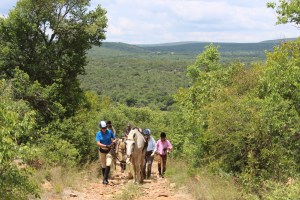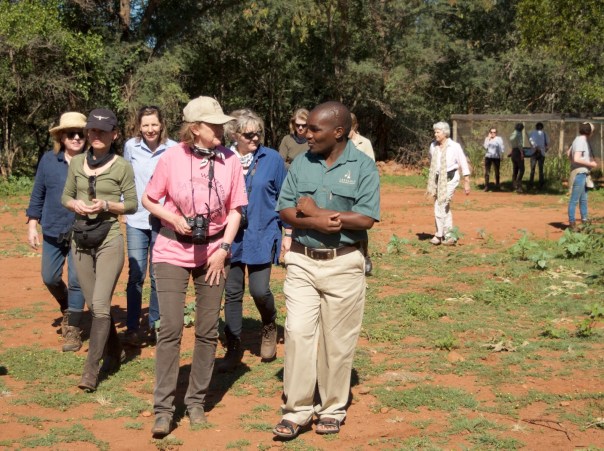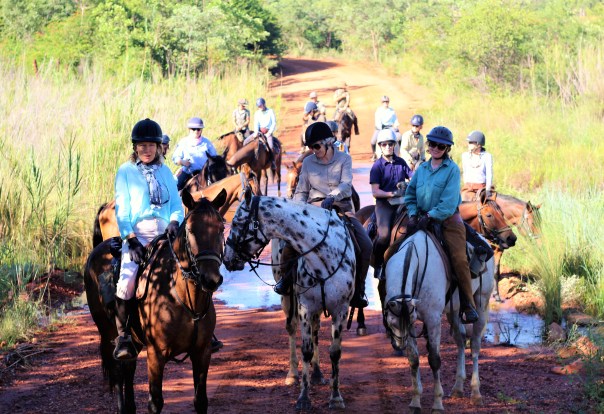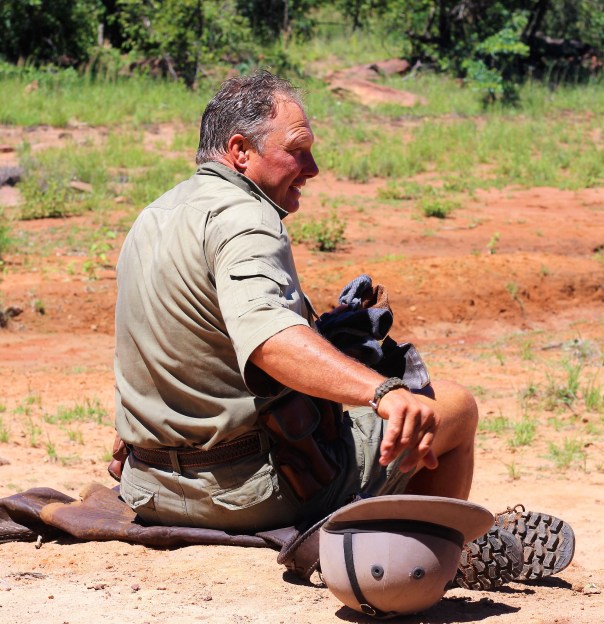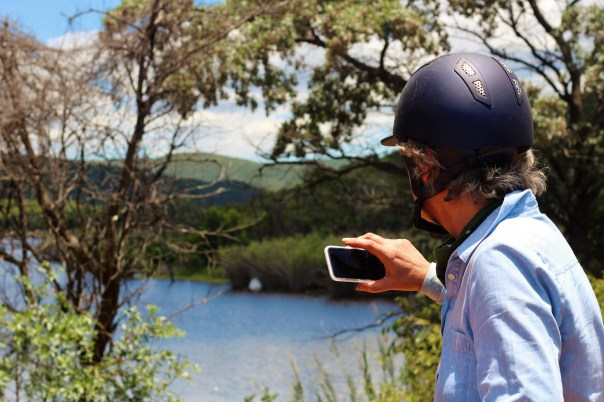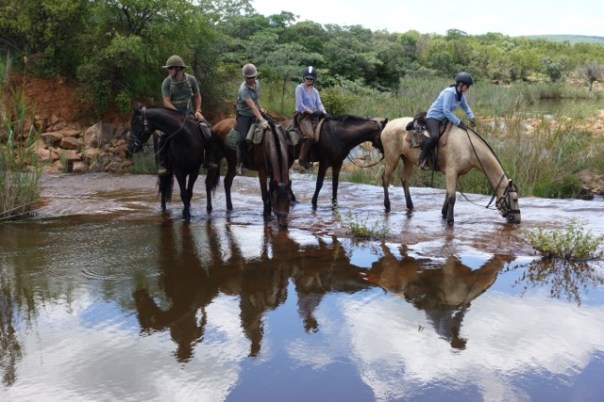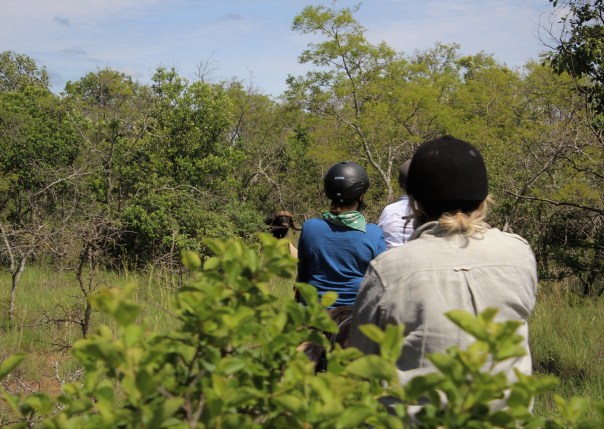


On 21st January 2018, twelve intrepid ladies – and one man – set off from Berkshire to cross the Waterberg Plateau in South Africa on horseback. The aim was to gain an understanding of this pristine wilderness and learn about challenges faced by the rural community, while raising funds to support the excellent projects being run out there.

Lying three hours drive north of Johannesburg, the Waterberg is home to the third highest population of rhino in the world. Poaching is so acute in South Africa it is imperative to guard this upland area where both black and white rhino can be protected.

Would you help us to raise awareness for Save The Waterberg Rhino, who are combating anti-poaching, and other community projects in this region?

The riders paid their own way, so every penny raised in sponsorship will go straight to The Waterberg Trust, a UK registered charity, who can send donations plus any Gift Aid, to these small but effective projects in South Africa.

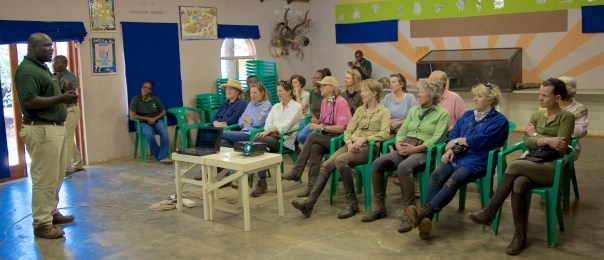
~Twelve inspirational women learning about community projects~
Funds go a long way to really make a difference in the Waterberg where they are administered by trusted conservationists with years of experience. You can meet those who are striving to Save The Waterberg Rhino and protect the wilderness while uplifting communities in the Waterberg, here:
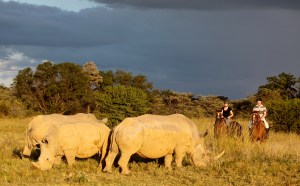
TWT have already held three annual Waterberg Trust Challenge Rides. Those taking part this year observed a number of white rhino living on Ant’s Nest game reserve, while being updated on anti-poaching initiatives by Tess and her husband Ant Baber who generously hosted the six-day ride.

The team crossed the Waterberg hills on horseback, meeting Clive Walker, a leading South African conservationist who appears in this film. He began reintroducing wildlife to the area forty years ago, becoming Chairman of the Endangered Wildlife Trust. He can be seen here speaking to TWT riders in 2016:

This year riders visited a new ‘Waterberg Living Museum’ set up by Clive to educate local people and visitors about rhino and the history of this unique biosphere.

Riders also visited Lapalala Wilderness School where pupils from Vaalwater attend residential courses on conservation sponsored by TWT. Students testify how this experience changes their outlook on life, giving them an appreciation for their environment and the future of South Africa’s wild animals. The children take their enthusiasm into the community whose support is essential if poaching is to be combated.

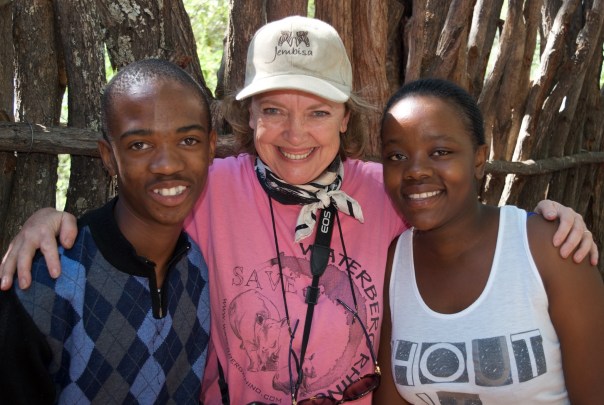
~TWT Trustee Sophie Neville with students at Lapalala Wilderness School~
After thirty-two hours in the saddle, the ride ended at the Palala River on Jembisa private game reserve. Before leaving, riders visited Lethabo Kids Club in the local township of Lesiding that ministers to the poorest of the poor and ensures all children attend primary school.

50% of funds raised by the sponsored ride go to Save The Waterberg Rhino and 50% to support community projects that uplift the people and place of the Waterberg.

WHAT YOU CAN DO TO HELP:
As a UK registered charity, The Waterberg Trust can claim Gift Aid on eligible donations, and organise transfer of funds to South Africa efficiently. You can add a note to specify ‘Save the Waterberg Rhino’ or ‘Lapalala Wilderness School’ or another project with your donation.


Are you up for a challenge?
Would you help raise funds for Save the Waterberg Rhino along with education, health and welfare projects that uplift communities in the area?
Following the success of our third annual ride this January, we are looking for fit and experienced riders to join our group on a sponsored ride, with back-up welcome from non-riding partners who will have the opportunity to fish and take game drives or ride mountain bikes.
Ant’s Nest have offered to take us through the private game reserves of the Waterberg on their lovely horses.

Riders’ overall dates: 20th Jan to 28th Jan 2018 + option of one extra night
Saturday 20th Jan: Fly out to Johannesburg – we suggest on Flight BA55
DAY 1 – Sunday 21st Jan You will be met off your International flight at Oliver Tambo Airport, Johannesburg and driven north, about 3 hours, to Ant’s Nest Private Game Reserve deep in the African bush. Lunch will be served on your arrival. After settling into the lodge we will go for a ride looking for zebra and wildebeest so that you can try out your horse. If you are not totally happy you can try a different mount the next day – there are about forty to chose from. It will be high summer in South Africa, so the bushveld will be green. We’ll be able to hear about plans for the ride as we have dinner by the fire that evening.
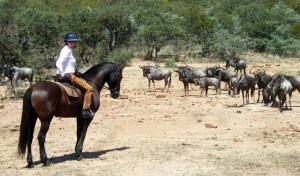
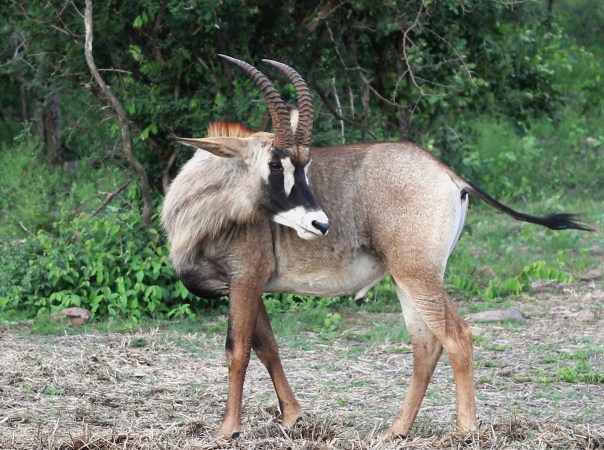
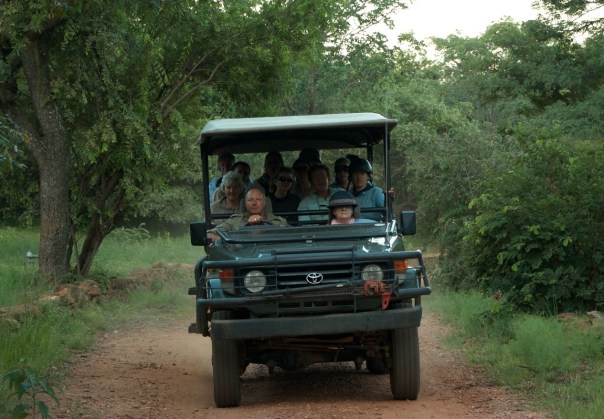
DAY 2 – Monday 22nd Jan We’ll spend the day riding up to Ant’s Hill, viewing game on horseback and looking for a breeding herds of buffalo, as well as rare sable and roan antelope. Any non-riders will have the choice of game walks, fishing or mountain biking. Each rider will pack a small bag with a swimsuit, wash bag and clothes for the next two nights on safari. As the sun goes down, you’ll meet white rhino living on the reserve while Tessa Baber gives a talk on the work of ‘Save the Waterberg Rhino’. The Waterberg is home to the third largest population of rhino in South Africa, so their protection on the plateau is vital.
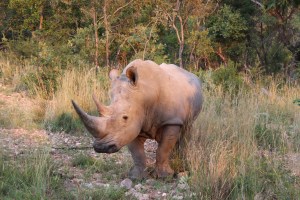
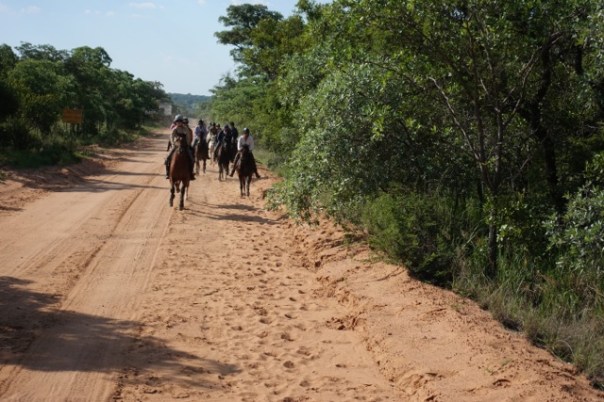
DAY 3 – Tuesday 23rd Jan We set off early, riding east through the reserve and onto sandy roads where we can canter for miles. We are planning to ride to the newly opened ‘Living Museum’ where we can learn more about rhino from the author and wildlife artist Clive Walker, one of South Africa’s leading conservationists. We’ll be joined for lunch here by any non-riders who will have had the opportunity to observe wildlife on the way over. That afternoon we hope ride through a reserve breeding rare golden wildebeest up to Triple B Ranch, the cattle stud owned by Anthony’s family for over a hundred years. There are beautiful gardens here and a warm pool. We’ll stay at Windsong Cottage – the farmhouse built by Ant’s grandfather, Alfred Baber.

DAY 4 – Wednesday 24th Jan We will ride through the Sesotho village on the farm and down through the game reserve at Horizon, which will give us the chance of seeing impala, zebra, giraffe and eland along with primate species as we might spot vervet monkeys and baboon. Lunch will be enjoyed at a dam with the hope of spotting hippo. Non-riders will be taken on a tour of this amazing area in search of game. We’ll have a long ride in the afternoon, as we make our way over the hills and through Lindani private game reserve for the night. There is a good paddock here for the horses, a pool and we should be able to see game from the lodge. Be assured we will see a large number of warthog.
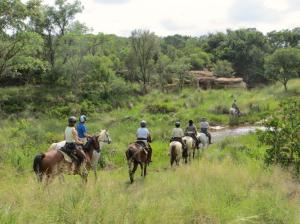
DAY 5 – Thursday 25th Jan We will ride through Lindani, up a kloof to find game on plains that look down past a north-facing escarpment. We should see warthog, zebra, giraffe, eland, red hartebeest, wildebeest and greater kudu. We ride under high red cliffs, where vultures nest, to Jembisa, a private game reserve on the Palala River where we will have lunch. We’ll ride across the reserve and be able to relax at the lodge, enjoying comfy beds and hot baths.
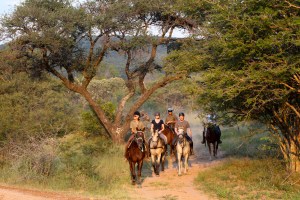
DAY 6 – Friday 26th Jan The Waterberg Trust enables local children to go on a residential course at Lapalala Wilderness School near Jembisa. We hope to be able to see around this project before riding across Jembisa that morning. We should find hippos and perhaps see crocodile before meeting up with non-riders for lunch. That evening we will ride up to a view-point to grab a few photographs before bidding our horses farewell. There will be time for a swim before dinner at the lodge.

DAY 7 – Saturday 27th Jan After breakfast outside we will take a game drive to see ancient bushmen paintings on the reserve before brunch and drive back via an excellent sewing project selling curios and an educational project in the township enroute to the airport.

Sunday 28th Jan – Your flight will arrive back in the UK early am. Riders can opt to stay an extra night at Jembisa to unwind. This would cost £150per person, fully inclusive of drinks and activities. Depart from Johannesburg airport on the evening of Sunday 28th Jan to arrive back early morning on Monday 29th January.

The ride is a unique opportunity to ride alongside wild animals in this beautiful area, now proclaimed a UNESCO biosphere. The itinerary may change – but only for the better! We are hoping for a group of 12 riders who need to be fit and experienced as there will be approx 25 – 40kms of riding per day.
Since we plan to visit a number of projects being supported by The Waterberg Trust you will get the chance to meet local people who would benefit from the funds you are raising.
The cost is £1,800 per person, sharing, inclusive of all meals, local alcohol and soft drinks, accommodation, riding, game drives and bush walks, as well as road transfers to and from the flights specified. The cost for non-riding partners is £1,440 Your contract will be with Ant’s Nest. The contract for the extra day would be with Jembisa, who would invoice you separately. There would be 50% supplement for anyone wanting a single room. If enough people want to come for a day or two before the ride Ant’s Nest are happy to offer us a favourable rate.
We recommend coming out a couple of days earlier and staying on for one night. (Please note: Additional transfers will be charged if we don’t all travel together – There will be two vehicles.)
Flights, tips and travel insurance are not included. To secure your place Ant’s Nest need a non-returnable deposit of £600. The balance of £1,200 must be paid by 30th November 2017.
Ant’s Nest and Jembisa offer comfortable lodge accommodation with ensuite bathrooms. Windsong and Lindani are simpler and some will have to share bathrooms.
The horse safari will be led by Ant Baber who owns Ant’s Nest . Sophie Neville, a trustee of TWT who became a safari guide in the Waterberg back in 1992, will lead the group and take you to see established charitable projects in the area.
To participate you need to raise a minimum sponsorship of £1000 for The Waterberg Trust. As a registered UK charity, Gift Aid can then be added. 50% of sponsorship raised will go to Save the Waterberg Rhino Trust and 50% will go to community projects in the Waterberg. While we encourage riders to find sponsorship some of us are raising the donation of £1,000 in other ways such as hosting a sale or asking for donations instead of birthday gifts.

Please contact Sophie for help with fundraising ideas and making a Justgiving page Tel: 01590 678438 sophie@sophieneville.co.uk
Flights and Transfers: We find it is best if people book their own flights to Johannesburg – try Trailfinders or Flight Centre or the BA sale. Do liaise and fly together. We suggest you take Flight BA55 that departs Heathrow at 18.10 on either Friday 19th Jan 2018 (when TWT Trustee Belinda Chaffer is flying out), or Saturday 20th Jan. They arrive in Johannesburg at 7.15 am. Book the Return on Flight BA54 on either Saturday 27th Jan or Sunday 28th Jan (with Belinda).
Should you need to arrive at other times, a private road transfer can be supplied but at an additional cost.
Make your way to the information desk in the arrivals hall where you will be met and driven to Ant’s Nest.
Do I need a visa? Check your passport is valid for at least six months after your return date and has at least 3 blank pages. Visas are not needed for those with British passports.
What vaccinations do I need? We recommend tetanus. The area is classified Malaria free.
What are the horses like? They have been carefully chosen from various South African breeds, known for being able to walk-out well while being able to cope with tough going. They live in the bush so are familiar with wildlife. Breeds include Friesan-cross, Boerperds, Anglo-Thoroughbreds, and the S.A. Warmblood. They range in size from 14.3h. to 17h. Tack is McClellan long-distance saddles and usually snaffle bridles.
Are riding helmets compulsory? Yes – bring your own hot-weather helmet and half-chaps.
What else should I bring? Not too much: it can be hot and sunny and could be overcast or rainy but will not get cold. Towels are provided. Bring comfortable riding clothes in earth colours, blues or greens – (not bright red) long-sleeved collared shirts, (men’s shirts are good), bandana, riding helmet, bum bag, lip salve, sun cream factor 30, short boots and chaps, Barbour raincoat, camera with extra memory cards and extra camera batteries, sun hat, sarong, sandals or flip-flops, summer dress & comfy clothes to wear in the evenings. (Voltage is the same but round pin plugs – so you need an adaptor.) Bring a small bag for your swimming costume and washbag, pyjamas and torch that we will take to Windsong and Lindani. Handbags are not a good idea but remember your passport.
Do bring out any old children’s clothes, especially grey/black/white school uniform or sports gear as we can donate it to one of the schools or welfare projects in the Waterberg.
Is there a laundry service? We hope to be able to offer a limited laundry service.
Do cell phones work? Occasionally. Wifi is weak, We take radio communication and phones.
Useful contact numbers: These can be used the case of a badly delayed flight. Please give loved ones the Ant’s Nest phone numbers: Tel 1 : +27 (0) 83 287 2885 Tel 2 : +27 (0) 87 820 7233 Tel 3 : +27 (0) 83 681 8944 (Emergencies only)
Money: We suggest you don’t change too much money into the local currency as your trip is fully inclusive – however there is a craft shop at Ant’s Nest that takes credit cards.
Ant’s Nest ~ www.waterberg.net
Windsong on Triple B Ranch ~ http://www.waterbergcottages.co.za
Lindani ~ http://lindani.co.za/
Save the Waterberg Rhino ~ http://waterberg.net/save-the-waterberg-rhino
You can see photos from previous rides, along with information about the projects and info on how to make donations on The Waterberg Trust website: http://thewaterbergtrust.com

Bringing you some of the best photographs from The Waterberg Trust Challenge Ride in January, featuring each of the riders who took part and gallantly raised funds for Save The Waterberg Rhino and community projects in the area. Thank you for all your help and support!

-Ant Baber leading the riders in search of game re-introduced to the Waterberg-

-Juliet Madden from North Yorkshire who gathered together the group-

-Sam Scott from Cumbria with giraffe on Ant’s Nest in the Waterberg-

-Tina Fox-Edwards from Berkshire riding across the Waterberg –
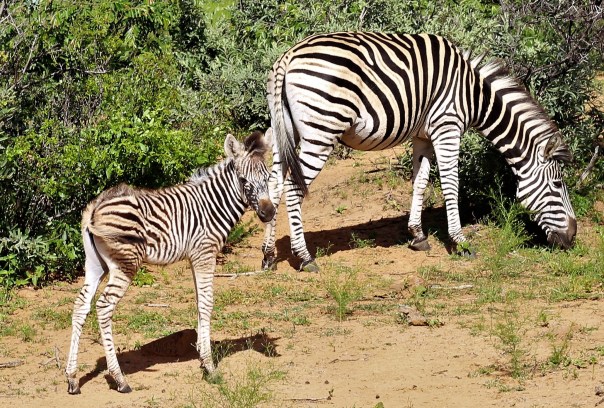
The rains had been late and we saw newborn animals


-Hilly Collinson from Yorkshire, grabbing photos of giraffe-

-Louise Horsely from Australia coming across a herd of buffalo-

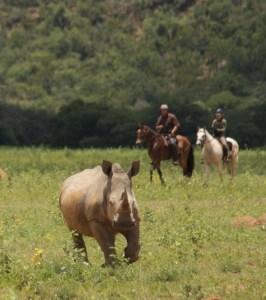
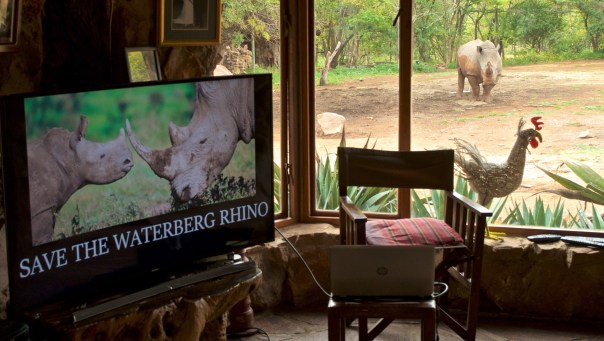
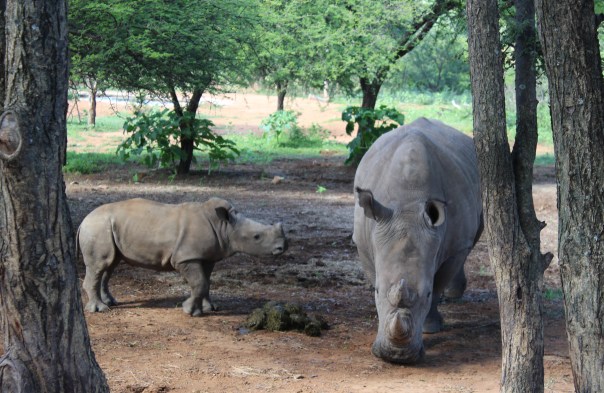
-A white rhino arriving while we were being given a talk–

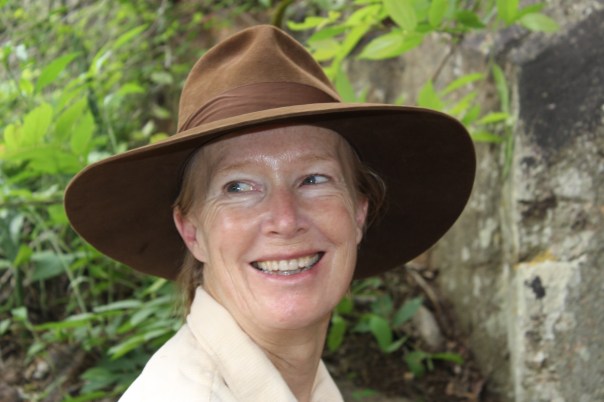
-Janie Beardsall from Yorkshire in her bush hat-

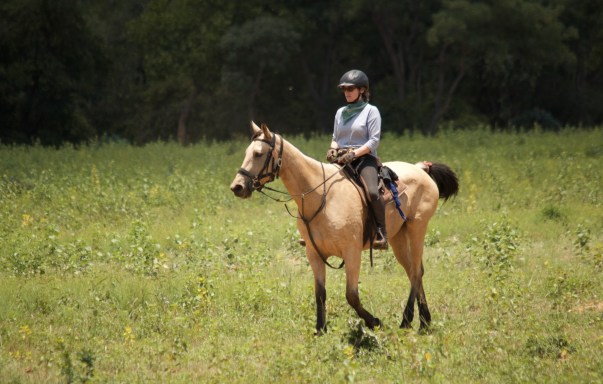
-Elisa Spearmann from Wiltshire on her mare-

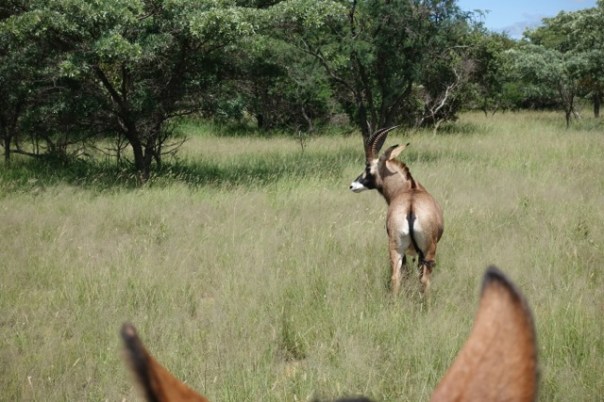
– A roan antelope photographed by Mairi Hunt-

-Camilla Newton from Rutland-

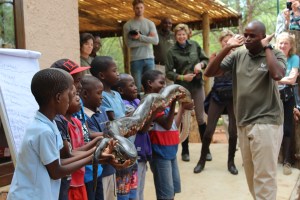
-Sisters, Mairi Hunt and Sally Milvertson being introduced to a python-

-Claudia Smythe-Osbourne from Yorkshire with two very young giraffe-

-TWT rider Lulu Ferrand from Leicestershire –
-Simon Williams-Thomas from Hampshire on ground support –

-TWT Trustee Sophie Neville observing the endangered white rhino-

Many thanks go to Tessa Baber for hosting the ride and having us to stay at Ant’s Nest

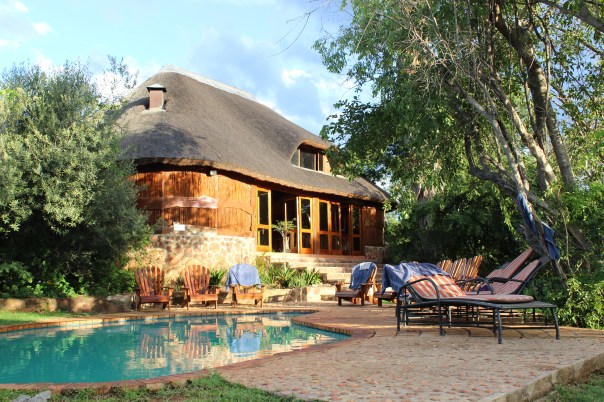
-The lodge at Ant’s Nest some three-and-a-half hours north of Pretoria-
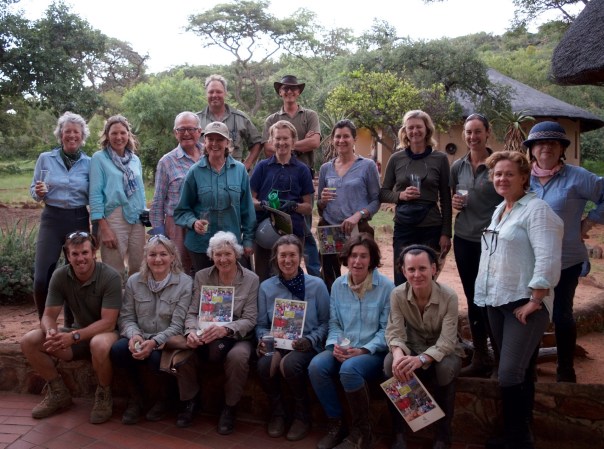
-The team: TWT riders and guides at Kolobe Lodge on Lapalala Wilderness, January 2017-
– Sunset at Ant’s Nest photographed by Sam Scott –
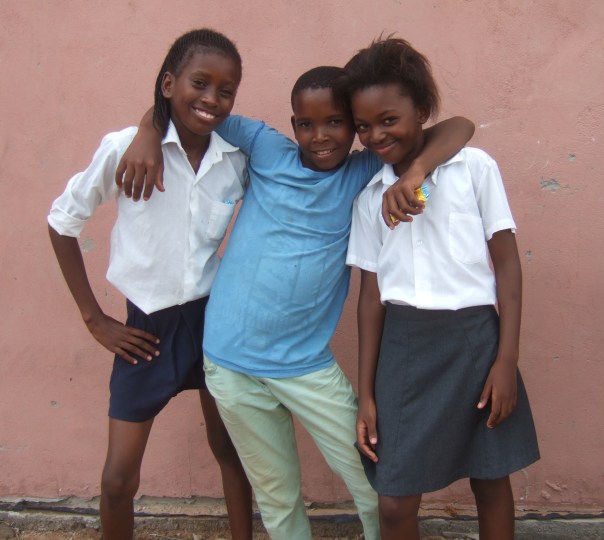
Every year, TWT fundraisers drive to the township of Leseding outside Vaalwater to visit Lethabo Kids Club.

The Waterberg Trust has been supporting their ‘Back to School’ project by helping to equip the children with school uniform, school shoes and bags.

This whips up enthusiasm for going to school where disadvantaged children are fed and cared for.

The children are sponsored with one item each. They normally chose school shoes. These cost approximately £10 a pair and last for a long time. The shoes are purchased and fitted locally.
Fundraisers were able to meet Marilyn Cook who has been running the project for more than eighteen years and is now assisted by the youth who first came as small children.

The team heard of her plans to provide sponsorship for tertiary education of the youth who have shown commitment to the project and help with the little ones.

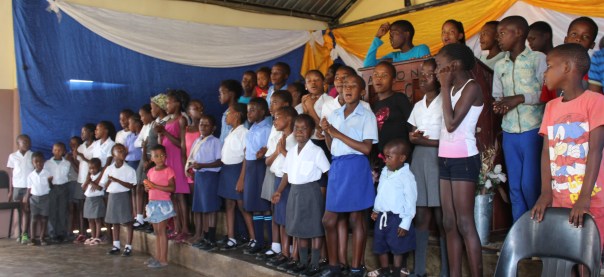
The children love singing and put on a performance hugely appreciated by their visitors


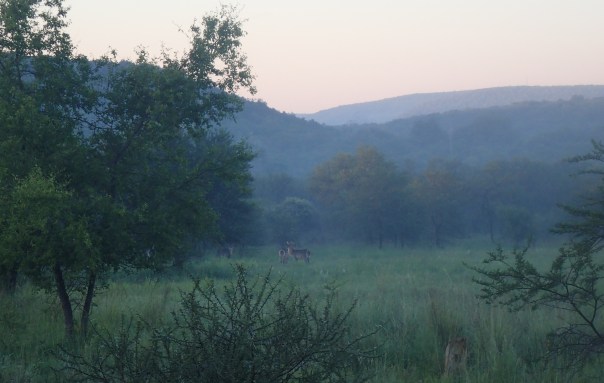
Waterbuck were grazing in the Palala Valley as we set out at dawn on day six of The Waterberg Trust Challenge Ride 2017.
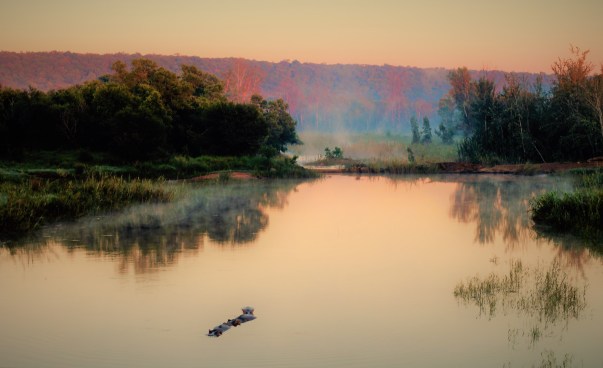
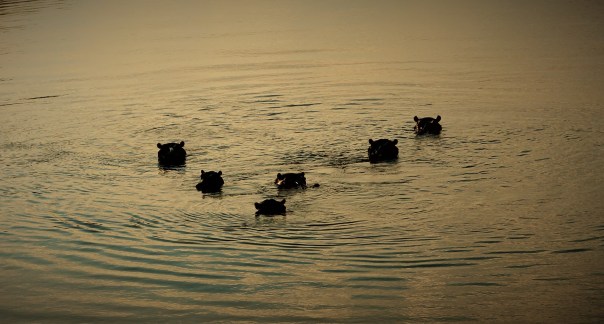
Hippo looked on as we went down to tack up the horses for our last day of riding.
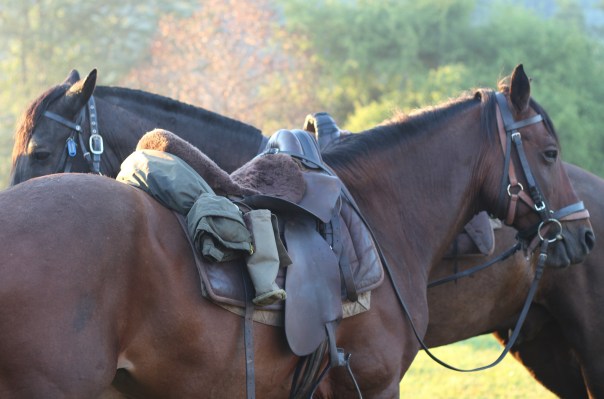
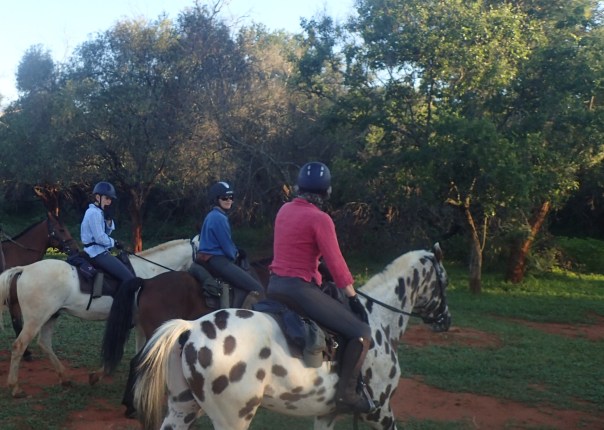
It was good get back in the saddle and set off early.

We passed blesbok as we cantered down the airstrip

before making our way up into the hills, by which time the sun had come up.

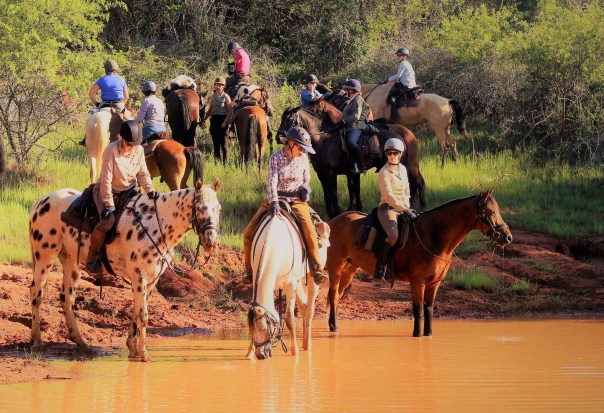
After following four oryx through the bush, we reached a dam at the far end of Jembisa where the horses could drink.

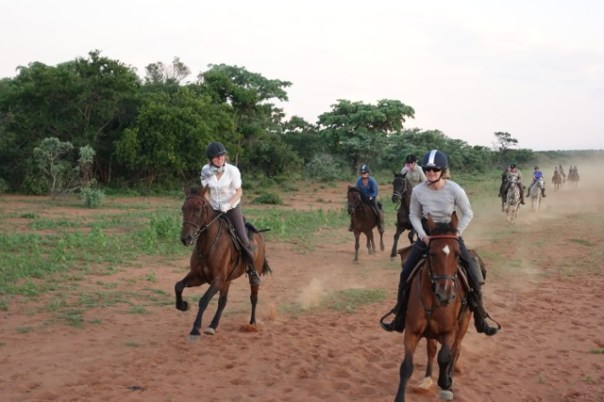
That afternoon we rode fast across the reserve

Making our way to a view-point, tired but happy after a long, adventurous week in the saddle.

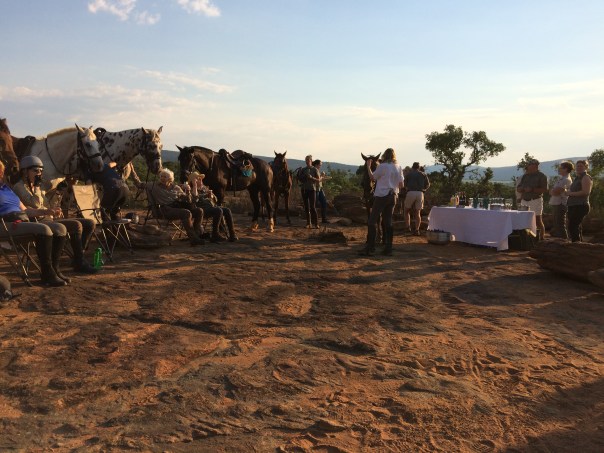
What no one guested was that they would be treated to a champagne as the sun set.

It was hugely appreciated and well desereved by the riders who had all done so well.

That evening was celebrated in style. Stories were told and events of the week recounted.

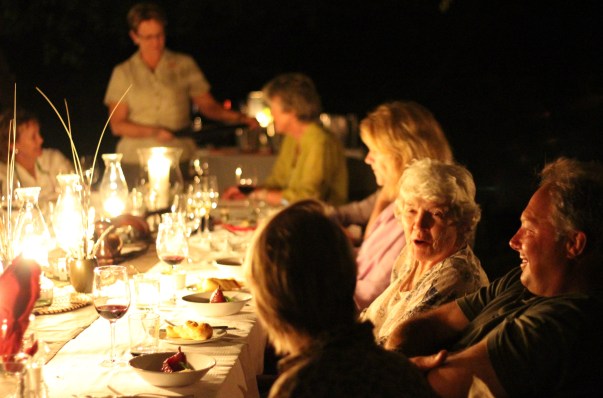
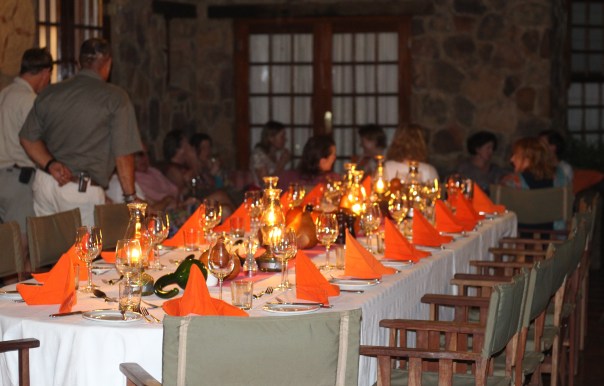
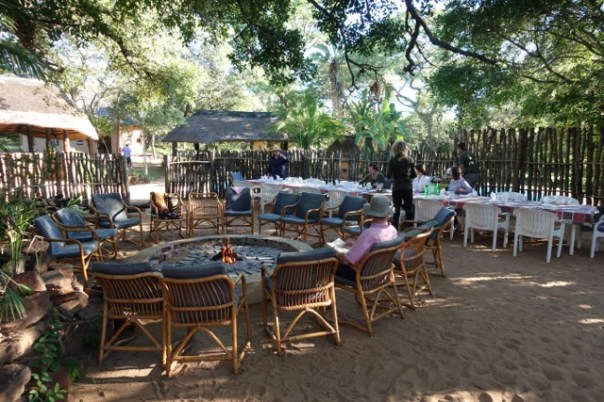
We were treated to a wonderful Africa dinner under the trees with candles and a fire.


While the TWT riders were looking around Lapalala Wilderness School on the morning of Day 5, the horses were able to enjoy a rest and a good feed.

Ant Baber, who was leading the expedition, had them tacked up before coming too collect us from the environmental project.

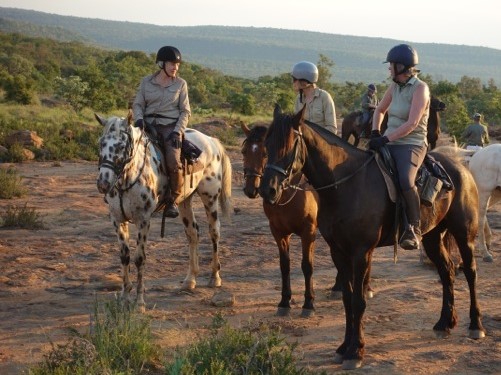
The riders put on their chaps, helmets and suncream getting ready for the day ahead.

Ant’s horse was eager to get going.

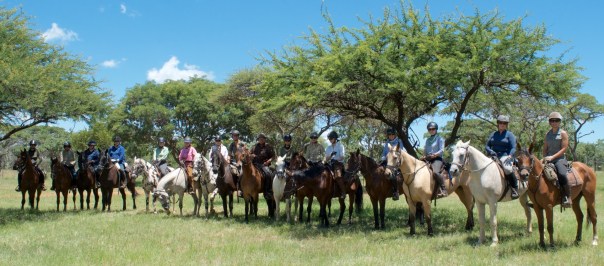
A team photo was taken of the sixteen horses by Save The Waterberg Rhino and we were off.

It was a hot sunny day, the bush teeming with life after the rains.

We saw quite a bit of game on the plains, including warthog, zebra and wildebeest.

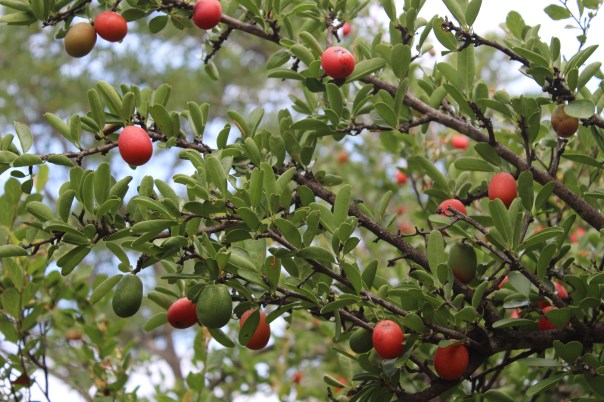
We also took time to learn a little about the trees and flowers.


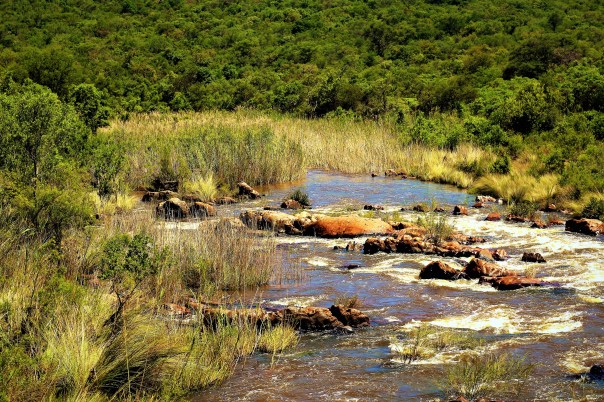
Ant then took us down the valley to the Palala River, which flows northwards towards the Limpopo.

The back-up vehicle got stuck in a stream running down the the river. It looked serious as the ground was being washed away from under the Landcruiser but Ant winched it up the bank and all was well.

Most of us were pretty tired and a little dehydrated by this stage but horses and riders were able to relax in the shade at lunchtime.

That afternoon we were able to enjoy a long canter down the old road where the going was good.

We went through an old Transvaal cattle farm,

crossed the Melkriver and made it to Jembisa Lodge.

The horses had comfortable accommodation in the manager’s garden.

We passed a pod of hippo in the Palala River and drove up to the lodge for the night.

Dinner was held under the thatched veranda where everyone was able to relax for the evening and look forward to another day.


Although the group of thirteen taking part in the challenge ride were briefed over breakfast, none of them guessed who they would meet that morning.

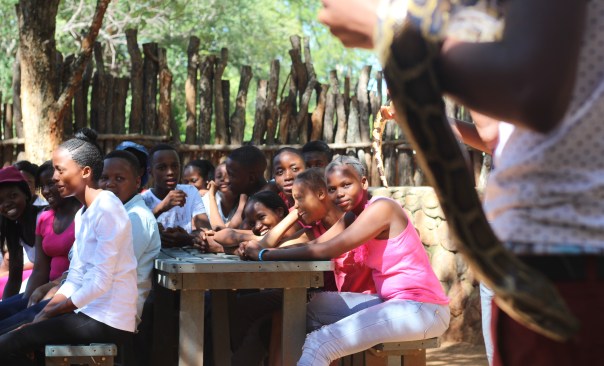
The beautiful snake, a rescued Burmese python, is an impressive teaching aid at the Lapalala Wilderness School. We saw how local teenagers reacted to reptiles during an outdoor seminar on nature conservation.

The students, who came from Metshesethela Secondary School in Vaalwater, were being taught about the importance of protecting South Africa’s wildlife and the environment.

Their 3-day residential course at Lapalala Wilderness School was sponsored by The Waterberg Trust. The riders explained how funds were being raised in the UK and Australia.

Two of the pupils delivered a carefully written speech of thanks, saying how the course keyed in with their school curriculum. None of them had been to the eco-school before.

TWT riders were able to met the staff, some of whom had originally come to Lapalala as school children themselves. The eight educators do a wonderful job of inspiring others and run a Youth Development Programme, which entails taking promising individuals from disadvantaged communities and attempting to bring hope and direction to their lives.

Learning about the history of the school, now it its 31st year, was fascinating. Many confirm that attending a course here was a life-changing experience.

They aim:
To promote an appreciation and respect for the extrordinary diversity of Africa’s natural world and to develop and encourage a passion and commitment to conserve nature and ecological processes, where possible identifying and nurturing the conservation champions of the future.
The Lapalala Wilderness School does this through a schools’ programme and by reaching out into the surrounding area through broader youth and community projects. The staff are supported by a Board of Directors, several of whom have an active role in activities.

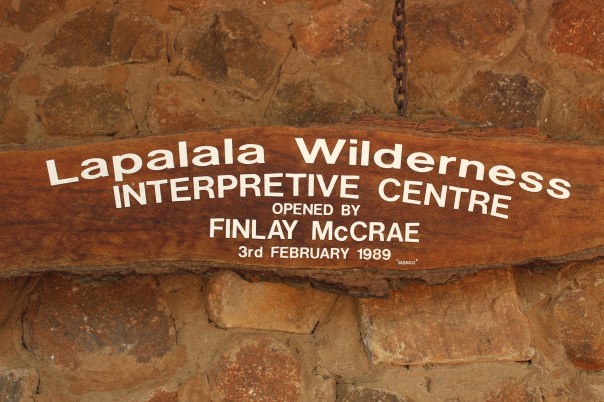
The plight of both black and white rhino is brought to the attention of students and those visiting the Interpretative Centre at the school where the skulls of poached rhino are on display.

As the learners put on life-jackets and went to experience paddling a small boat deep in the African bush,

TWT riders were given a tour of the school and its vegetable garden by the director, Mashudu Makhoka, who briefed us on their exciting plans for the future.

It was evident that by teaching children to recyle, conserve water and plant food, the Wilderness School’s community projects are a huge force for the good in South Africa today.
This March, The Waterberg Trust is sponsoring approximately 60 children and their teachers from Mokolo Primary School in Vaalwater to attend a 3-day course at the school. This video shows how they will be impacted:
We enjoyed meeting both the pupils, educators and the python, and would like to extend our thanks to Lapalala Wilderness for accommodating both riders and horses.

~ TWT Trustee Sophie Neville with students from Metshesethela Secondarary School ~


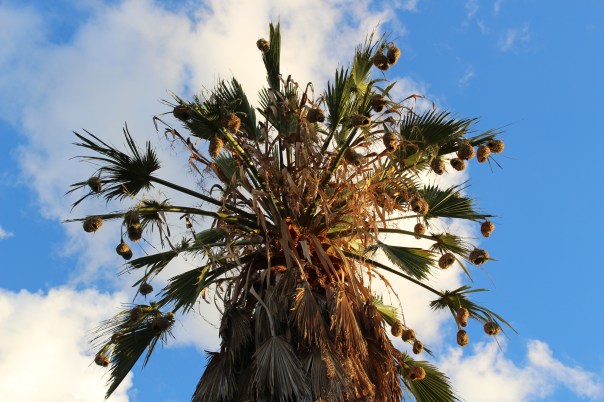
We were woken by weaver birds nesting above the lodge where we spent the night at Kwalata Game Reserve deep in the Waterberg hills.
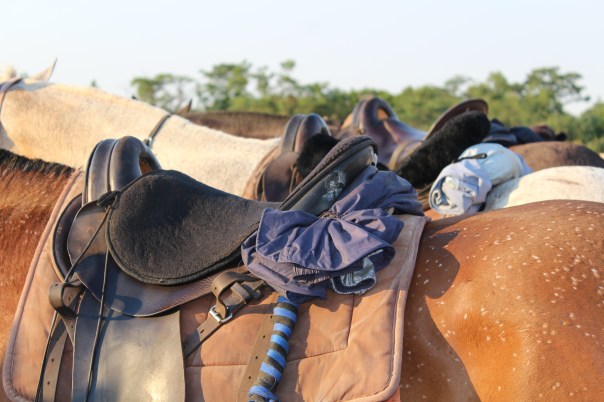
We tacked up our horses, tying rain coats behind our long-distance McClellan saddles, and left head-collars underneath our bridles so we could tie the horses up in the bush.

We set off in good spirits and rode through Kwalata into Lapalala Wilderness, a private game reserve of approximately 100,000 hectares.

Since the Waterberg is on an intercontinental convergence zone there is a greater variety of trees and shrubs on Lapalala than in the whole of Western Europe.

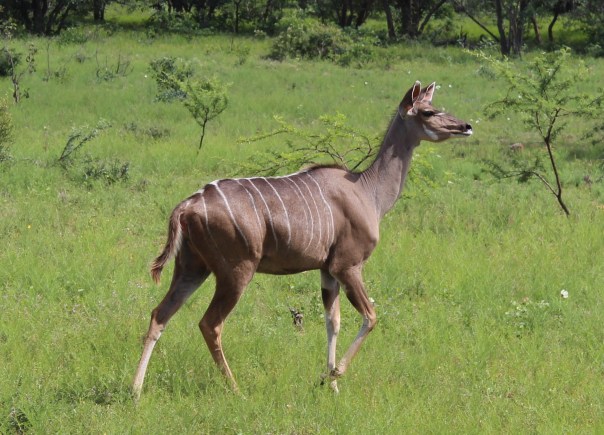
There is also a great diversity of birds, reptiles and mammal species with a range of different antelope from solitary steinbuck to herds of kudu.

The annual amount of rainfall can be pretty much the same as in London but in the Waterberg it usually only rains in the summer months with occasional downpours.

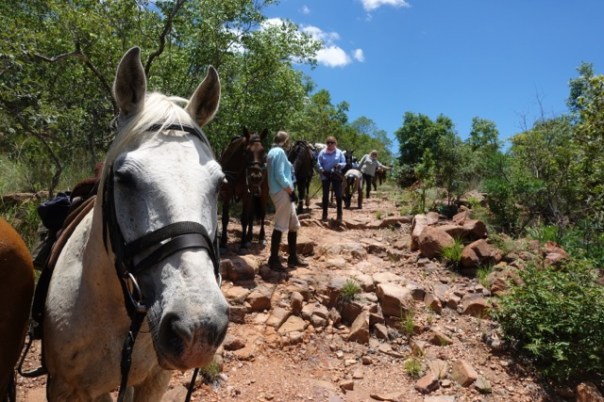
We enjoyed blue skies all day, walking beside the horses as we followed a rocky track down the escarpement as we made our way north.

We rode up a small river, making a number of crossings until we came across a dam where it was safe to swim.

By this time our leader, Ant Baber needed a break. He had missed breakfast.

We rode on up the valley, coming to a bigger dam known for its population of crocodile and hippo.

The horses were able to take a long drink before resting for a few hours at mid-day.

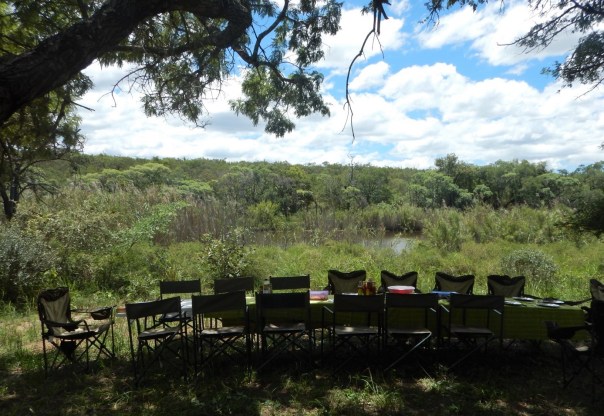
We were grateful to find table set out by the water with drinks and bowls of salad.

The riders, who were exhausted, appreciated the chairs and needed a sleep after lunch.

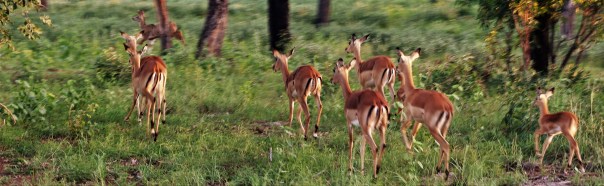
We opted to take the scenic route that afternoon, riding past herds of giraffe, impala,

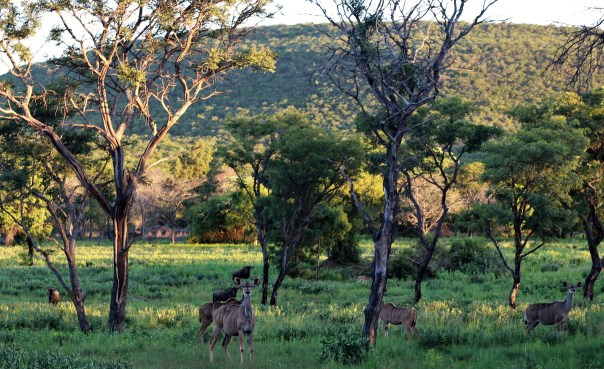
kudu and wildebeest, while vervet monkeys were spotted in the trees.

GPS readings revealed that we covered a total of 41 kilometers on this day when we grasped just how wild the Waterberg is.

That evening the horses ate well, appreciative of the lush summer grazing.

Ant Baber drove the group of tired but happy riders down the valley

for a well-earned drink

and a swim at Kolobe lodge

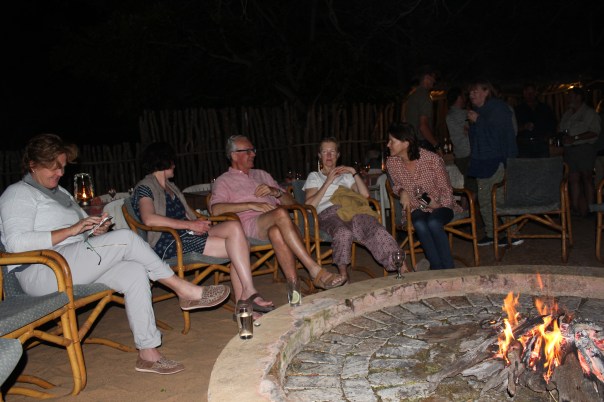
before gathering around the fire

where they met up with the back-up team and members of Save The Waterberg Rhino.

The director of Lapalala Wilderness School joined us, giving a short talk on what we could expect to see the next morning.

To keep in touch with new of The Waterberg Trust, please Like our page on Facebook.

The riders’ drew on their experience and fitness on the third day of The Waterberg Trust Challenge Ride, when we covered a more than 37 kilometers riding from Ant’s Nest to Kwalata Game Reserve on the Blocklands River.

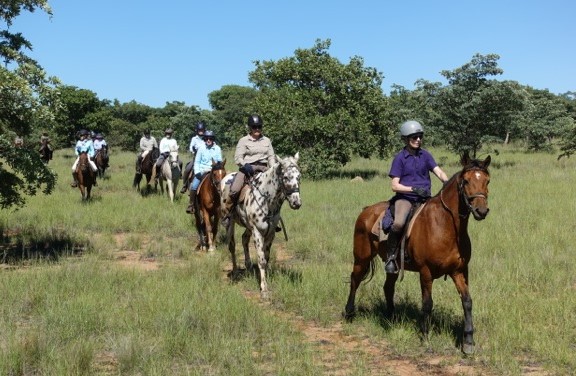
We made up a big group of thirteen horseman with three guides and set off early in an attempt to find wildlife.

It was white rhino that we saw first, including one cow with a three month-old calf.

We were able to get very close as the horses are used to grazing with rhino.

We then rode west through the bushveldt and although we cantered at times,

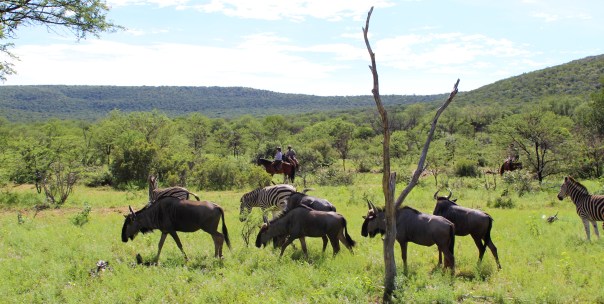
we went slowly in an attempt to find game, pausing to watch wildebeest and zebra.


After a while we came across Livingstone eland, a rare breed originating from Zimbabwe.

We crossed through recently filled dams

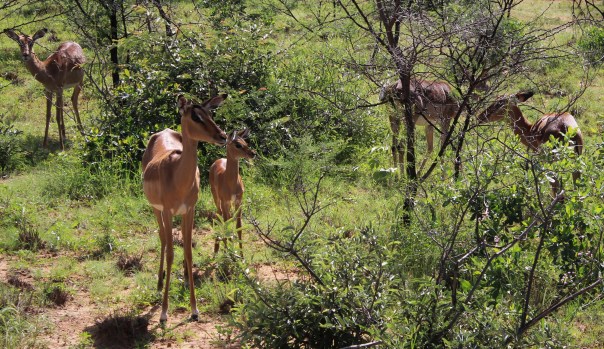
and came across a number of new-born animals, including impala lambs.


Once on the top of the escarpment, at some 1,400 metres above sea level, we found a breeding herd of buffalo – the bull looking at us from behind a clump of dense bush.

He was with a number of females.

We were also shown a breeding herd of rare roan antelope being re-introduced to the Waterberg.


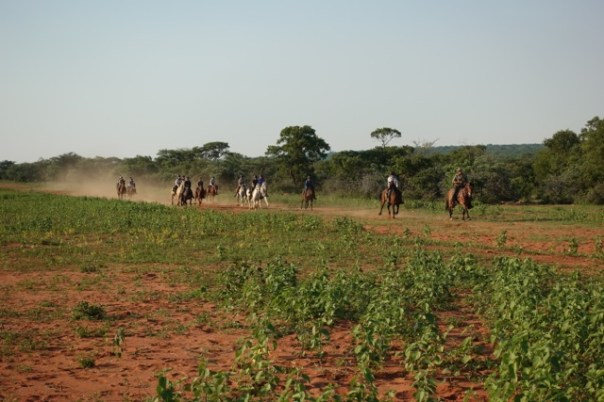
We then left Ant’s game reserve and enjoyed riding fast down sandy roads across the plateau

and down towards the Blocklands River that flows north into the Limpopo


The horses were fed and watered in a secure boma originally made for buffalo while the riders were housed at the lodge in cottages that looked out over the water.

Everyone was able to kick off their boots and relax after what had been a long day in the saddle.

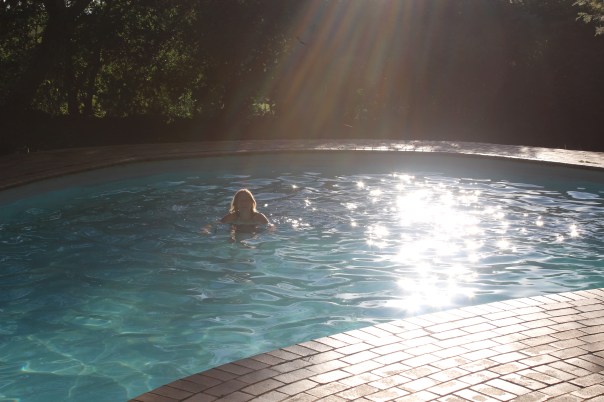
To our relief, there were bathrooms and a swimming pool to sooth aching muscles.

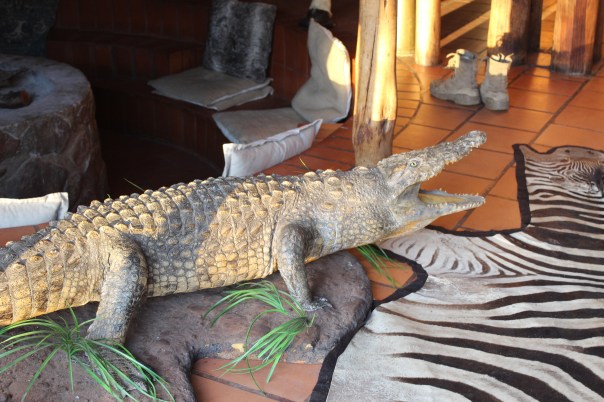
And even a stuffed crocodile – luckily the only one of his species we encountered on the ride.

To keep up with news and events of The Waterberg Trust please see our Facebook page