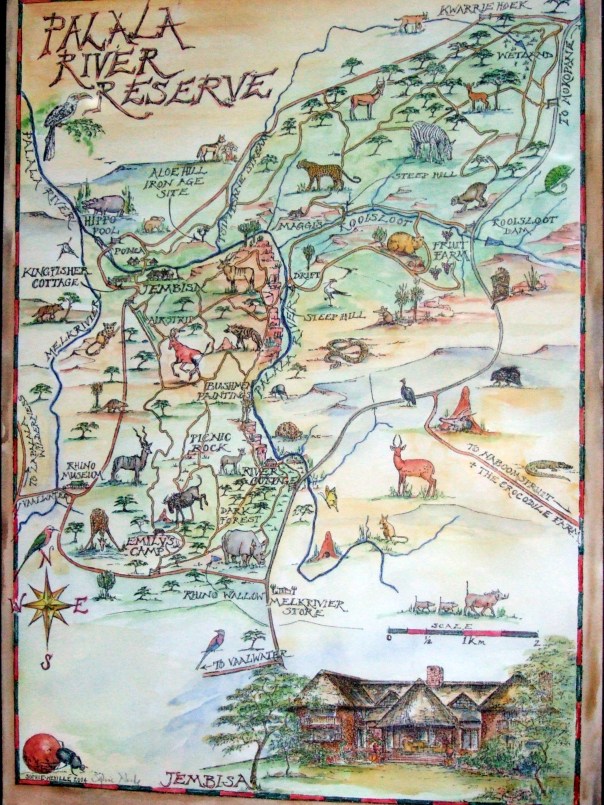
As the weather was relatively cool, Anthony Baber decided to ride north up to the Jembisa wetlands in the morning.
This entailed a bit of hard exercise as we walked up a stony hill past an old Iron Age fort.
It was worth it to reach a view point that enabled us to look down over the Palala River Valley and the way we’d come.
We saw wildebeest, zebra, impala and blesbok along with interesting birds
and returned to the lodge where Tess Baber and Kelly of Save the Wwaterberg Rhino Trust joined us for lunch outside.
That afternoon we rode fast alongside the airfield on Jembisa and along winding tracks through seringa woodland in the low evening light.
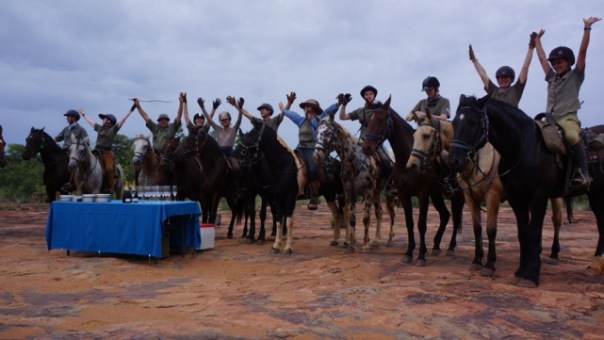
We saw red heartebeest on our way to a view point where the staff of Jembisa had champagne waiting for us to celebrate the fact that riders had covered more than 175kms.
We rode the last 5kms back under dark skies and bid farewell to our gallant horses who were trucked home, two by two.
We mounted our horses bright and early on Day 4 of The Waterberg Trust Challenge Ride
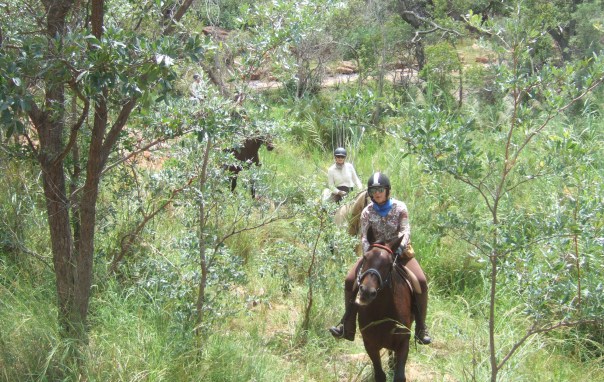
and set off into Kwalata game reserve with a map drawn on a piece of cardboard. As we rode into Lapalala Wilderness Ant warned us that if a black rhino charged and we found ourselves on the ground we should either get behind a tree or roll onto our back and kick it in self-defense.
We were venturing into truly wild remote country with diverse challenges that included walking the horses down a rocky track for a couple of kilometers passing middens that marked the black rhino territory. The dung itself had quite an attractive smell.
We were probably making too much noise to get close to wildlife but saw giraffe wildebeest, impala and a terrapin.
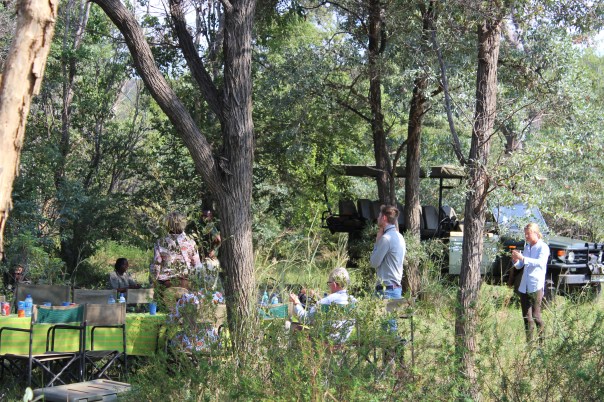
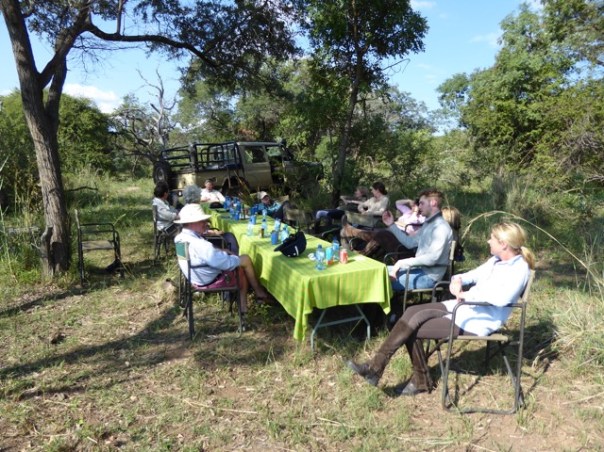
After nearly five hours in the saddle we were hugely relieved and deeply grateful to find lunch being cooked for us by the Palala River, along with chairs and a table.
The intrepid went off in search of hippo. We had been told there were also crocodile around.
We found the horses had been saddled up and rode on through Lapalala,
beyond the airstrip where the horses were to spend the night.
Here we found a black rhino in one of the game bomas and felt rather glad that he was safely behind a sturdy fence.
We had a bit of a problem on the third morning of The Waterberg Trust Challenge Ride. Some of the horses spurned their comfortable camp and tried to run home in the night. Luckily they were not able to get far but it meant we set off later than intended at 9.45am. Once in the saddle we were able to canter for miles along sandy roads over the top of the Waterberg Plateau and made up the time.
We needed to cover a fair distance but it was cool and the going good.
The third day is typically the most tiring for members of the team and we managed to break two stirrup leathers which slowed us down. We would have battled if the sun had been out.
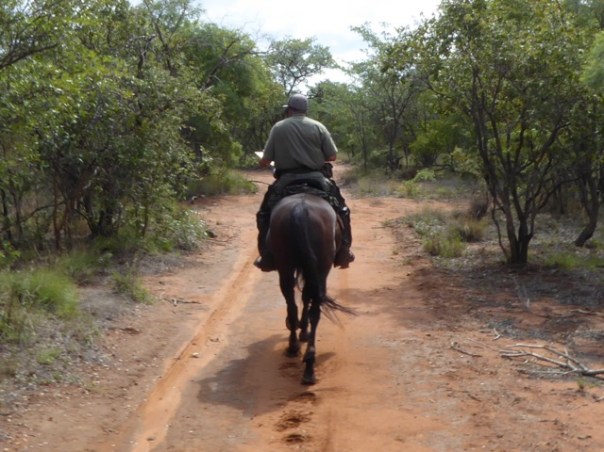
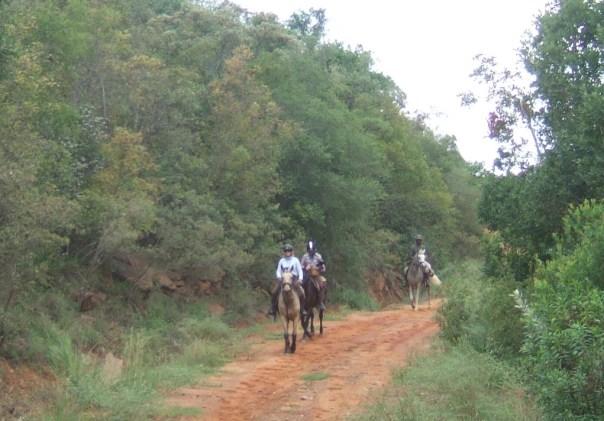
We are actually riding down a government road here – a very beautiful one.
Thankfully we made it to the gates of Kwalata private game reserve just as it began to rain at 1.30pm and were able to reach the lodge for a late lunch. Everyone was tired but grateful for a cool drink and a plate of lasagne, while the horses enjoyed fresh grass and a good feed.
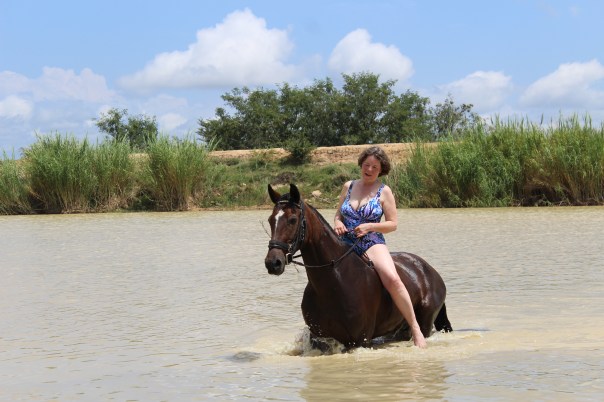
The rain cleared and we had time for a swim that afternoon before mounting up again.
We rode through the reserve for about 11kms, passing warthog and a few impala.
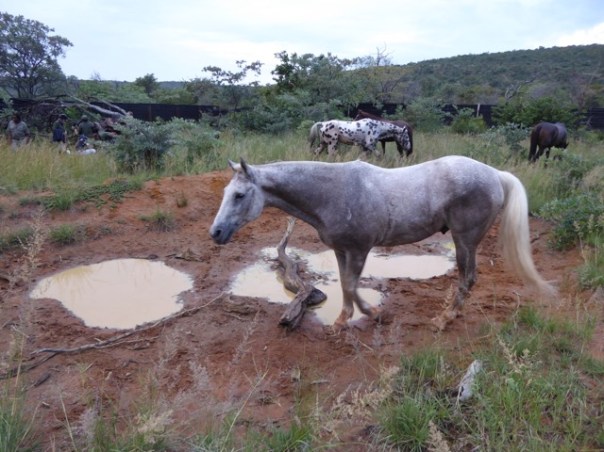
Our horses spent the night in a boma originally built for elephant. This gelding didn’t seem to think much of the way they’d left the bathroom.
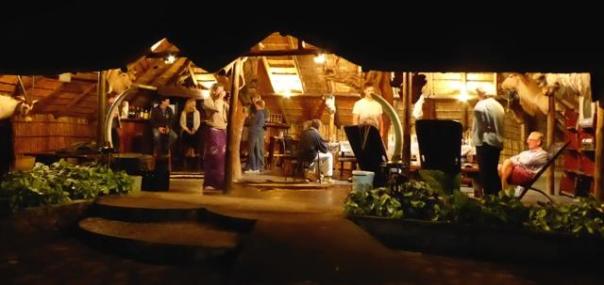
The riders were able to relax back at the lodge where there was a much nicer bathtub
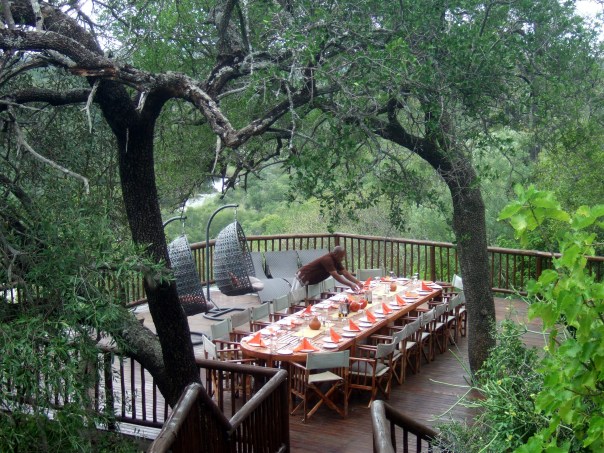
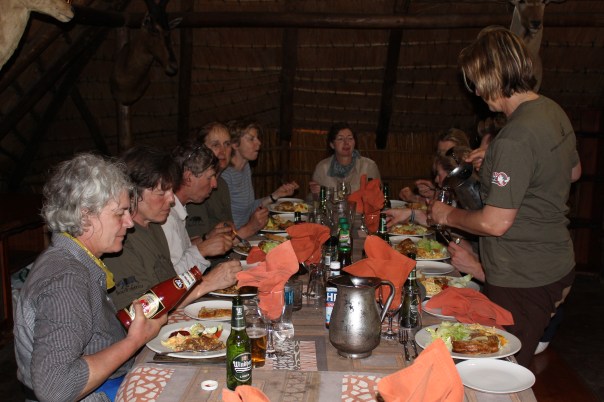
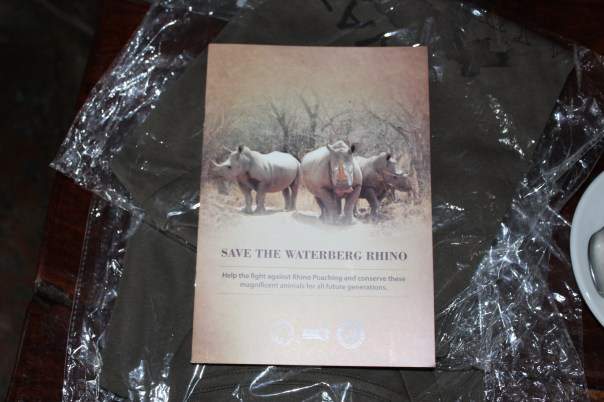
and very good food, cooked outside on the fire. The sponsored ride was led by Ant Baber in aid of Save The Waterberg Rhino and associated community projects in the Waterberg. If you’d like to make a donation we have a Justgiving.com page here.
If you would like to keep in touch, The Waterberg Trust have a Facebook page here.
Anne Lester, who came on The Waterberg Challenge Ride in South Africa this March, has just sent in some of the photographs she took of wildlife encountered on horseback.
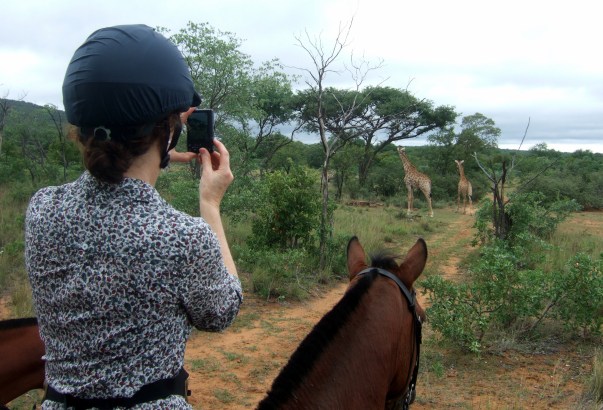
We rode close to giraffe, and were able to watch a group of eleven browsing.
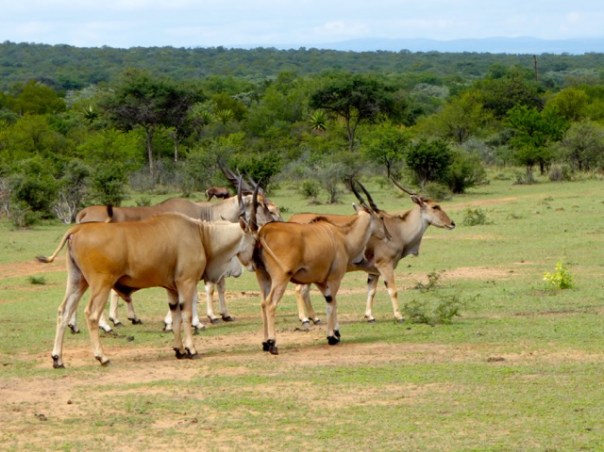
This is a breeding herd of rare Livingstone eland, the largest antelope species found in South Africa. We also spotted waterbuck, kudu, nyala, grey duiker, sable, roan, blessbok, oryx, red heartebeest and numerous herds of impala.
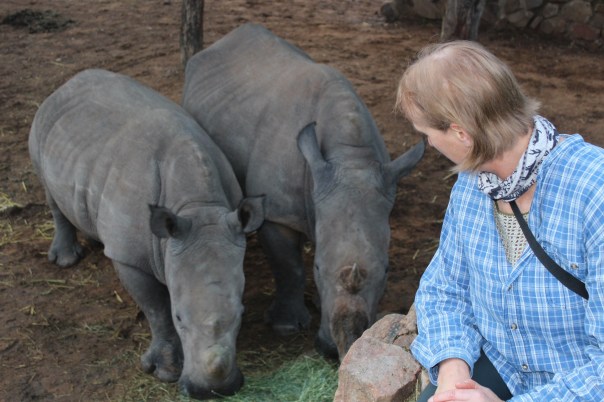
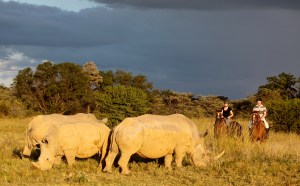
You can see how close we were able to get to animals on Ant’s Nest game reserve, a sanctuary for white rhino. Poaching in South Africa has become such a threat that these rhinoceros have had their horns impregnated with poison so they have no market value.
The rhinos are accompanied by armed guards 24 hours a day. This is expensive but meant that the animals are well habituated to horses and we managed to get very close.
The good news is that the rhino are breeding well and are in good condition. This calf was born two months ago after a two-year birthing interval.
We are currently fund-raising for Save The Waterberg Rhino who are striving to protect this special area as well as organising community projects so that local children can learn about the importance of nature conservation and ecology. If you can help, please go to The Waterberg Trust Justgiving.com page here. We have a Facebook page here.
On the second day of The Waterberg Trust Challenge Ride 2016 we mounted our horses and rode through Ant’s Nest game reserve up to Ant’s Hill in two groups consisting of 8 or 9 riders each: the tortoises and the hares.
Those going on the fast ride, led my Ant Baber, found themselves cantering alongside a herd of giraffe, which was exhilarating and covered more than 11 kms in about 3 hours.
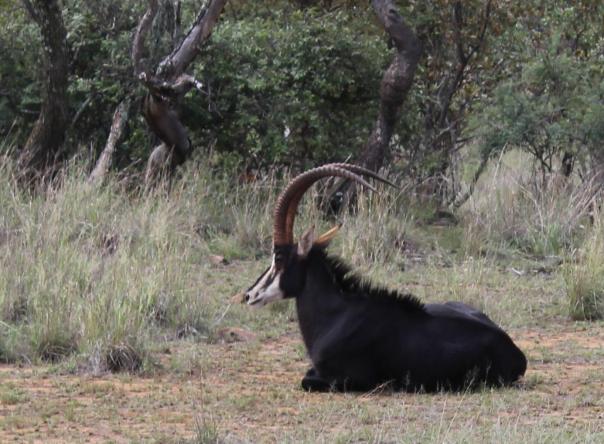
The tortoises rode more sedately, coming across zebra, warthog and rare antelope such a herd of Livingstone eland as well as a lone sable bull:
We rode on, encountering impala, blesbok and more zebra before reaching a dam. The hares arrived hot on our tails having spent time watching the behaviour of a herd of buffalo.
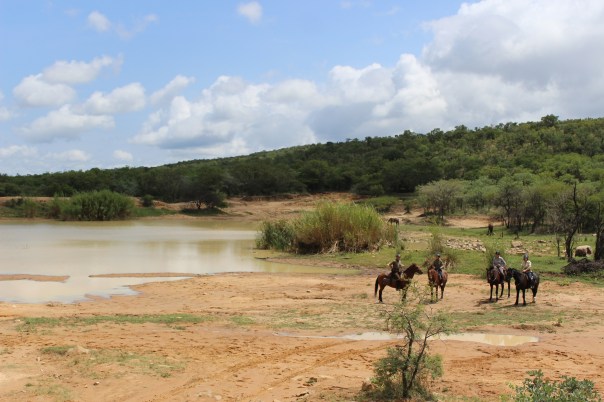
Some of the riders were able to take their horses in to cool off during the heat of the day.
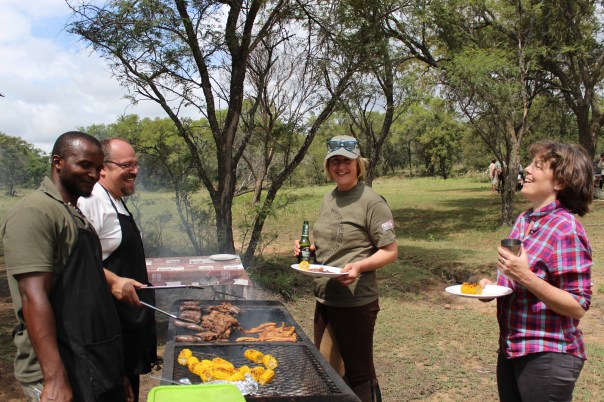
After being treated to a delicious lunch of homemade sausages cooked out in the bush
we had coffee at Ant’s Hill where we received a talk about the Waterberg Biosphere.
As we rode out that afternoon, we saw more game including a family group of bat-earred foxes. This was very special as the guides had only seen them once before on the reserve.
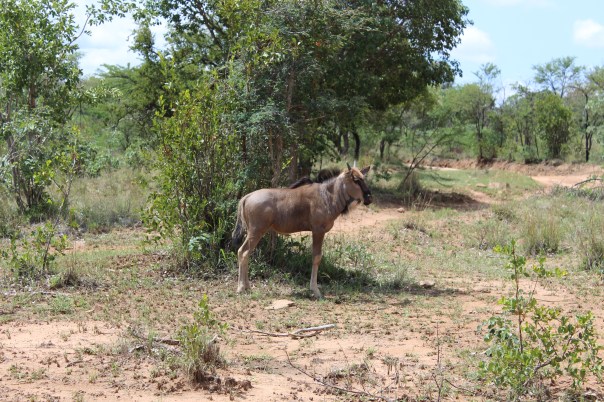
We spotted quite a few wildebeeste along with their calves who, at a few moths old, almost look like a different species:
It was the group of tortoise riders, going at some speed, who made it to the north of the reserve first, clocking up 26.3kms and reaching the top of the escarpment, 4,500 feet above sea-level. As the horses found hay-nets waiting for them in the paddocks of an old Transvaal farm, the riders returned in a game-viewing vehicle for one last comfortable night at Ant’s Nest and packed their bags for the next two days on the move.
If you would like to find out more, The Waterberg Trust have a Facebook page here. Riders are raising sponsorship for community projects in the Waterberg on Justgiving.com here
The dream of riding through the game reserves of South Africa became a reality for twelve British riders this March when they took up the challenge of raising £1,000 each for Save The Waterberg Rhino and local community projects.
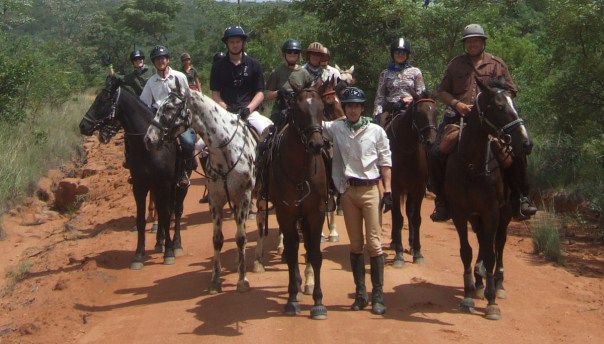
The team was made up of experienced riders
and, being led by Ant Baber,
the pace was fast whenever the terrain allowed.
The idea was to traverse 175kms of remote country
while taking the opportunity to learn about rhino conservation
and discover more about the Waterberg. For further detail and more photos of this ride, please see subsequent posts.
The Waterberg Trust Challenge Ride 2016 proved a great success!
Riders saw rhino from horseback and got very close to white rhino feeding.
They received a talk on the threat posed by poaching,
and were led over the hills of the Waterberg by Ant Baber to visit
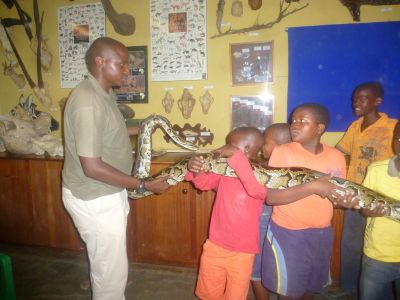
Lapalala Wilderness School where local children come to learn about nature conservation.
We raised more than £18,000 for Save The Waterberg Rhino and community projects in the Wateberg. We were able to send 120 children on a residential course at Lapalala Wilderness and gave a grant to Letabo Kids Club for their ‘Back to School’ initiative in the township of Leseding.
Sophie Neville has had a news article published in the Lymington Times
This coverage is wonderful as we want to raise funds to send 100 children on a eco-course at the Lapalala Wilderness School and support Save The Waterberg Rhino, raising awareness for conservation as we do so.
How you can support The Waterberg Trust Challenge Ride:
The Waterberg Trust Challenge Cycle Ride 2016 is gaining support with coverage on The Prospect Research and in the Leisure section of an online publication called Not Bovvered Weekly.
Barry Burles and his new bike
Barry Burles, a trustee of The Waterberg Trust, is leading his team on the 84-mile ride from Cambridge to the little village of Langham in Norfolk, a journey to be completed in one day, whatever the weather.
Old bike and new bike on the finishing line in Langham
Tucking into breakfast after a morning recce ride to Ely
They are committed to raising funds to support the people of the Waterberg in South Africa. If you are able to sponsor the riders, TWT has a Justgiving page here.
Tessa Baber, who appears in this short film, started ‘Save The Waterberg Rhino’ in 2013.
Those taking part in The Waterberg Trust Challenge Ride in March 2016 will be able to observe a number of white rhino living on Ant’s Nest game reserve, while being updated on anti-poaching initiatives by Tess and her husband Ant Baber who is leading the six-day ride.
The plan is to cross the Waterberg on horseback, traversing Kwalata private game reserve to Lapalala Wilderness where riders will meet the warden Anton Walker, who also appears on this film. He cares for both black and white rhino re-introduced to the area by his father, the author and wildlife artist Clive Walker when he was warden about thirty years ago.
While on this reserve riders from the UK will visit the Lapalala Wilderness School where children, often from deprived communities, come for a week’s residential course on wildlife conservation. Many of them testify how this experience changes their outlook on life, giving them an appreciation for their environment and the future of South Africa’s wild animals. The children take their enthusiasm into the community whose support is essential if poaching is to be combated.
The ride will end at the Palala River on Jembisa private game reserve who have been supporting Save The Waterberg Rhino and the Lapalala Wilderness School for some time.
The Waterberg Challenge Ride 2016 promises to be quite an intrepid adventure. The route has not attempted on horseback before. The riders face early starts and long hours in the saddle but they are busy getting fit and packing carefully in preparation for the challenge.
WHAT YOU CAN DO TO HELP:
Support the project on Social Media and receive news:
As a UK registered charity, The Waterberg Trust can claim Gift Aid on eligible donations, and organise transfer of funds to South Africa efficiently. Add a note to specify ‘Save the Waterberg Rhino’ or ‘Lapalala Wilderness School’ with your donation.
Riders are gaining sponsorship on individual pages:






















 The Waterberg Trust Challenge Ride 2016 proved a great success!




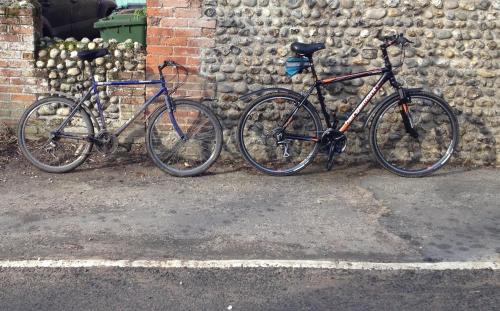 Old bike and new bike on the finishing line in Langham
 Tucking into breakfast after a morning recce ride to Ely

 The Waterberg Trust