Tag Archives: South Africa

Highlights of The 5th Waterberg Trust Challenge Ride, 2019

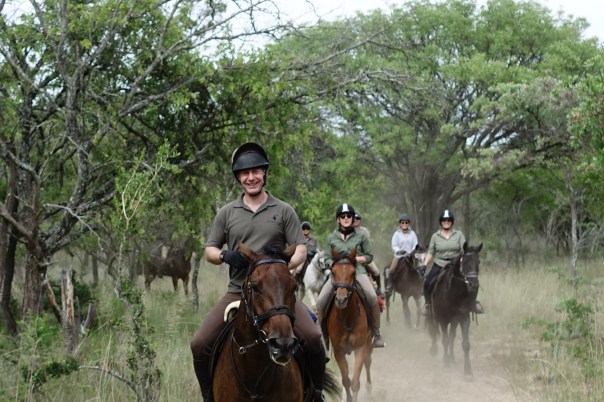
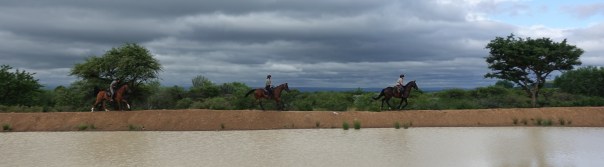
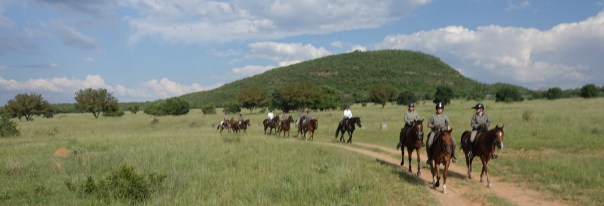
Skies looked threatening at the start of The 5th Waterberg Trust Challenge Ride but the game viewing was excellent with herds of zebra and antelope enjoying lush grass.

The ride was hosted by Ant’s Nest who had prepared some of their best horses for what proved to be a 208 kilometre marathon.

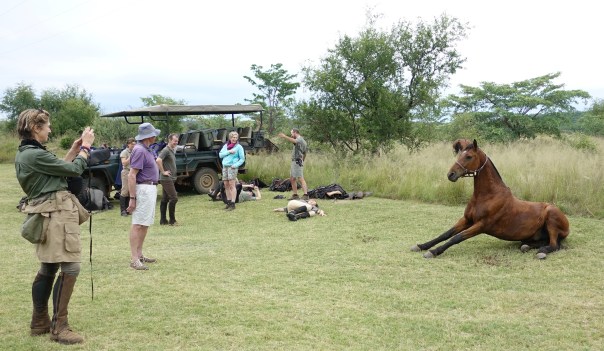
Since Ant’s horses usually graze in the bush we were able to get exceptionally close wildlife while riding around the property.

Riders were able to observe rare breeds such as Livingstone eland and sable antelope.

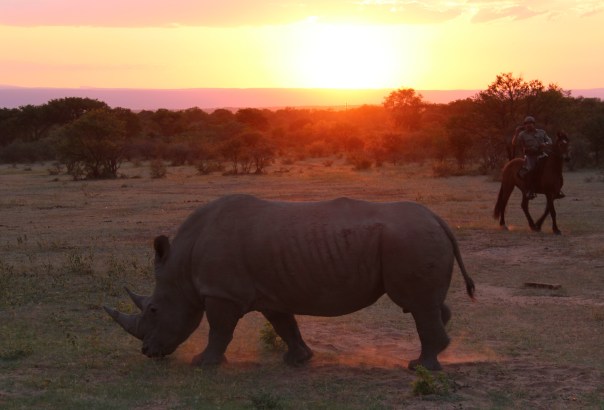
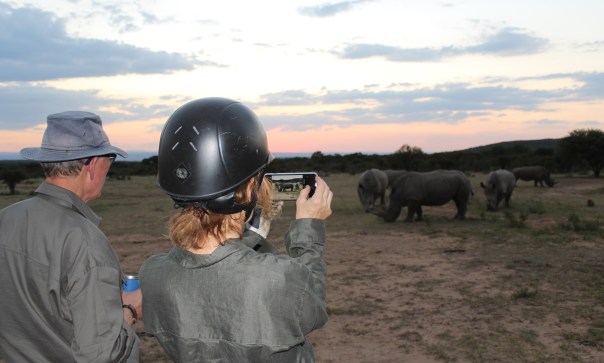
We made our way up to Ant’s Hill in search of rhino, finding the dominant male.

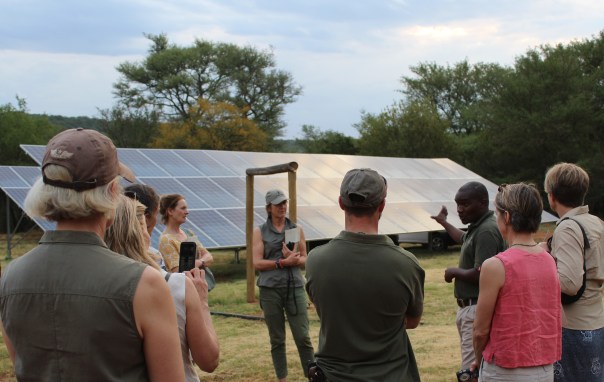
Jessica Babich of Save The Waterberg Rhino gave riders a talk on how funds raised by TWT are being used to install high-tech security equipment to combat poaching.

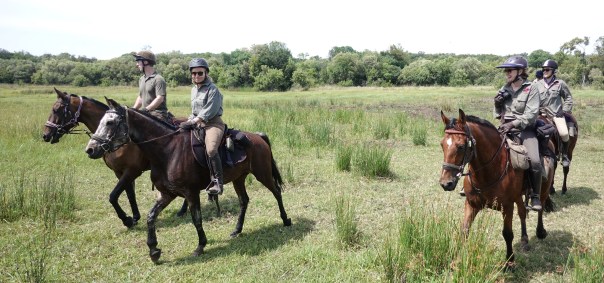
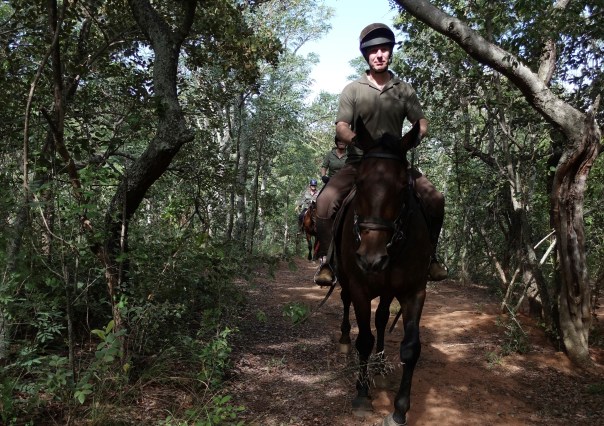
Early on 31st January, everyone was ready to cross the Waterberg, heading north towards the Palala River.
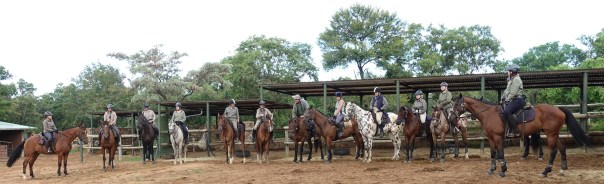
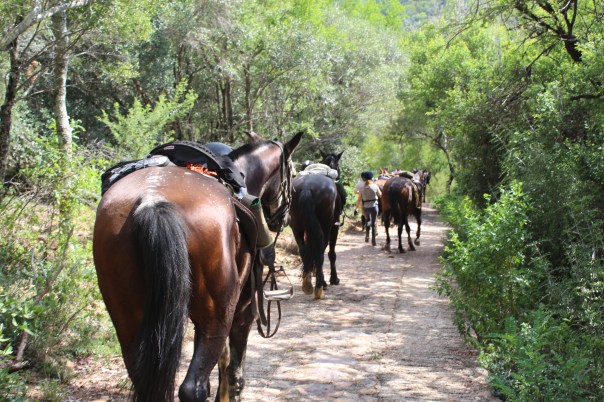
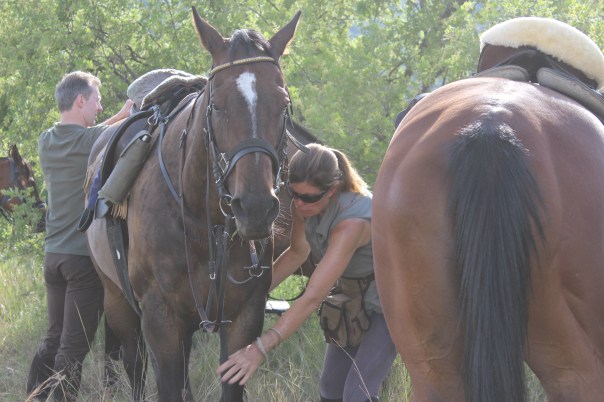
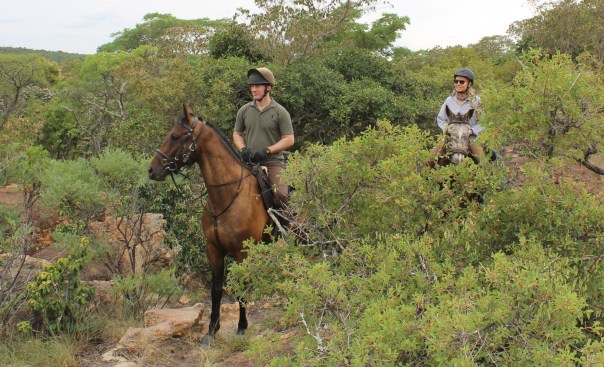
The horses wore head-collars, lead ropes and long-distance saddles for the journey.
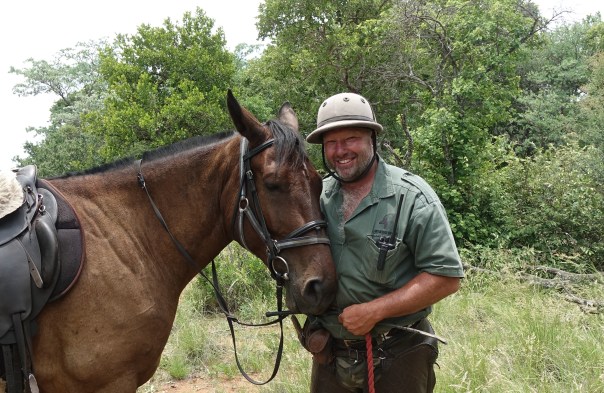
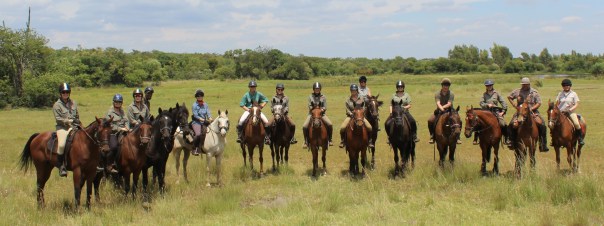
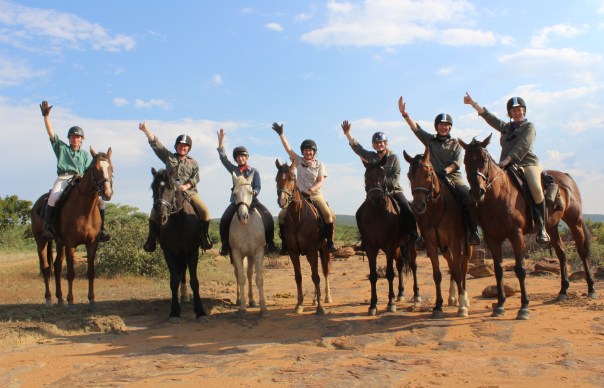
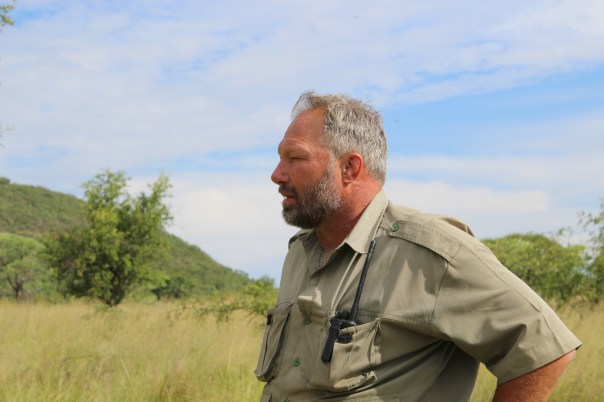
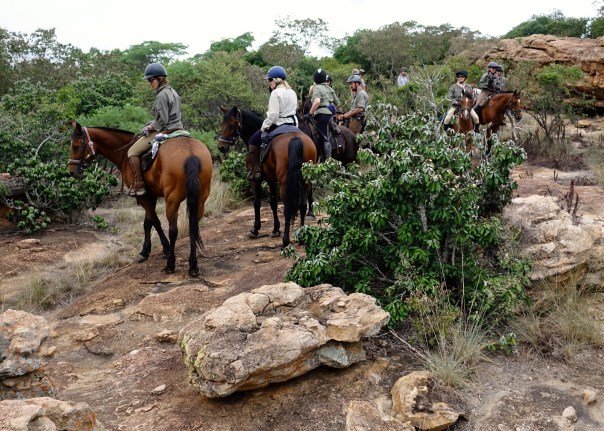
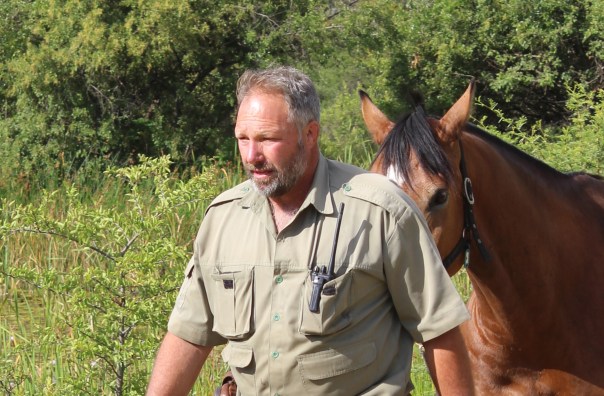
Ant Baber led the team of twelve ladies who soon found themselves passing one of his breeding herds of Cape buffalo.

After pausing to take photos we rode through neighbouring game reserves, crossing wide open plains where wildebeest and blesbok roam.

Lunch was taken at the Waterberg Living Museum, established by Clive Walker and his son Anton Walker, who showed us around. They have a room dedicated to information on rhinos and the poaching situation.

The Waterberg Trust has donated picnic tables, benches and information boards to this centre of environmental education created for local schoolchildren and visitors.

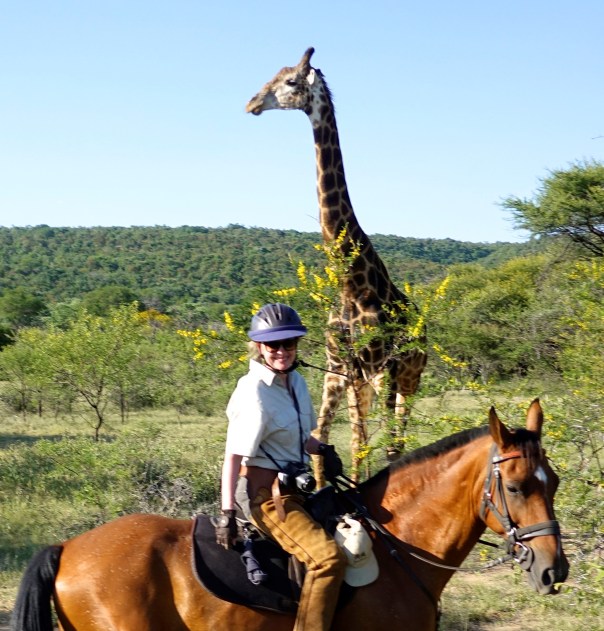
We rode on, spotting giraffe, impala, blesbok and golden wildebeest as we made our way

through another reserve to spend the night at Waterberg Cottages on Triple B Ranch.
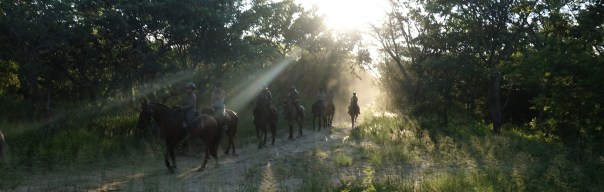
It is home for the Baber family who began rearing cattle in the Waterberg in the 1880’s.

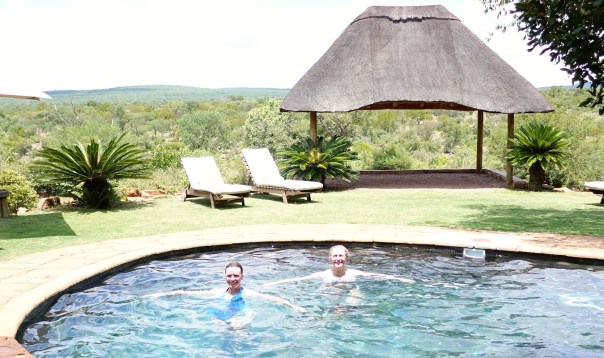
There was a solar-heated pool to relax sore muscles and reviving ginger drinks for all.

Dinner was served on the veranda of the farmhouse built by Ant’s grandfather in 1928.

The next morning, we rode through the lovely old traditional Transvaal farm, passing herds of Bonsmara stud cattle.

Summer rain had filled some of the twenty-two dams built by Ant’s father.

We cantered down through woodland, where baboons could be heard barking, and stopped for breakfast at Horizon Horseback Safaris where hippo were in residence.

After crossing plains inhabited by ostrich, we reached another lake on the Melkrivier.

Egyptian geese,  African fish eagle and rare spur-winged geese flew up as we passed by.
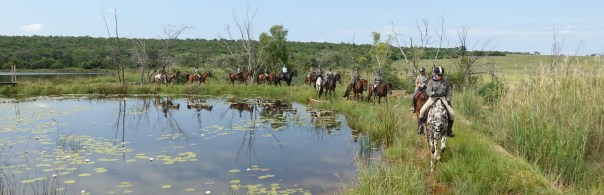
We crossed through an old cattle farm and cantered along red roads to Lindani game reserve where we stopped for lunch at a dam where crocodile are known to flourish.

Everyone was pretty tired but after a relaxed lunch, when we could rest the horses, we rode into more hilly country.
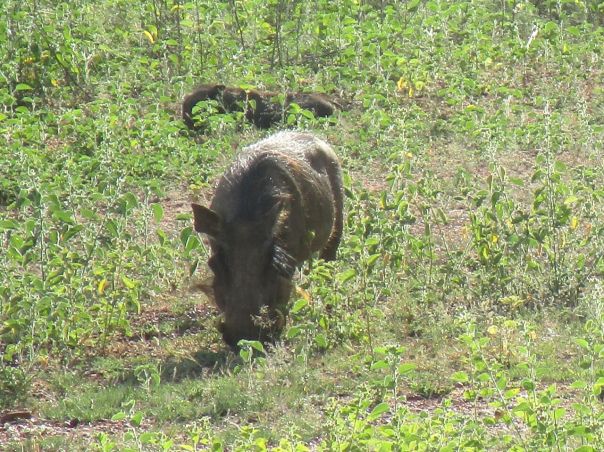
Lindani game reserve has a high population of giraffe, warthog and other plains game.

Two nights were spent at Motseng Lodge where the horses enjoyed excellent grazing.

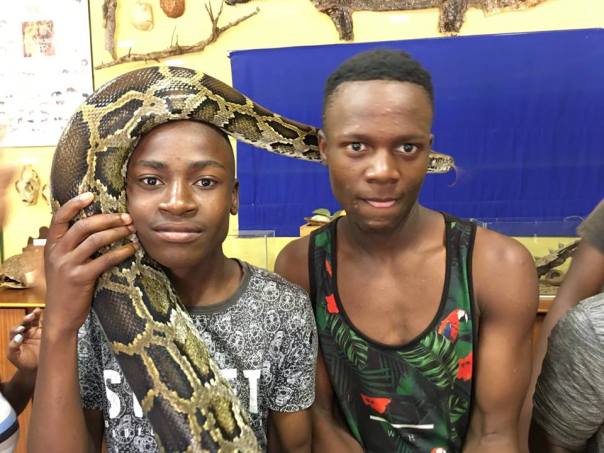
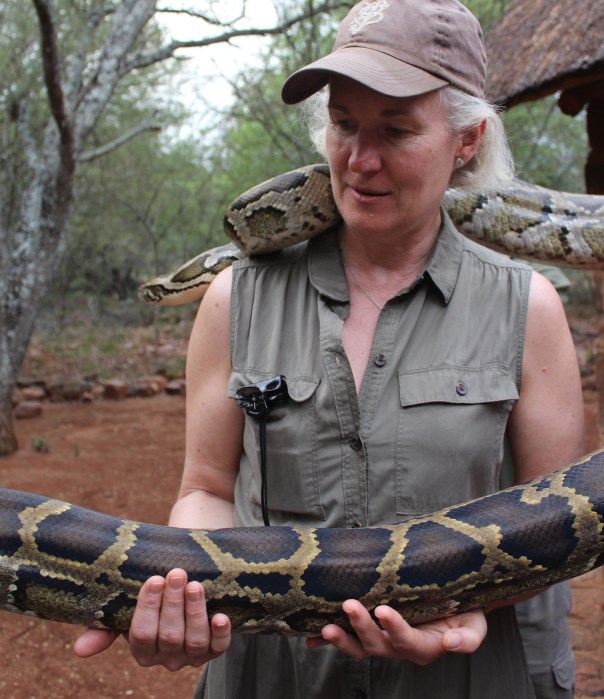
This enabled us to pay a visit to Lapalala Wilderness School where we met a python and

enjoyed a game drive on Lapalala Wilderness before exploring a remote corner of Lindani on horseback.

Crossing reed-choked stream beds could be challenging but the horses were brave.

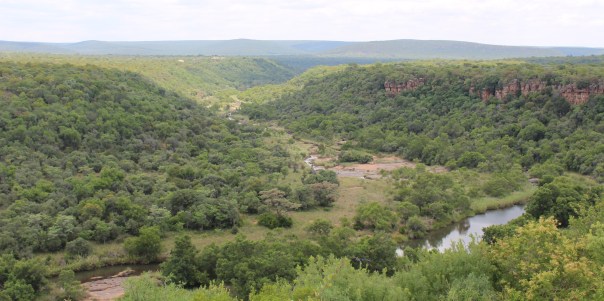
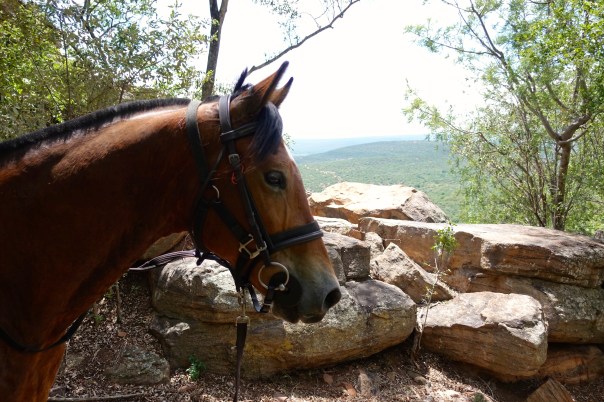
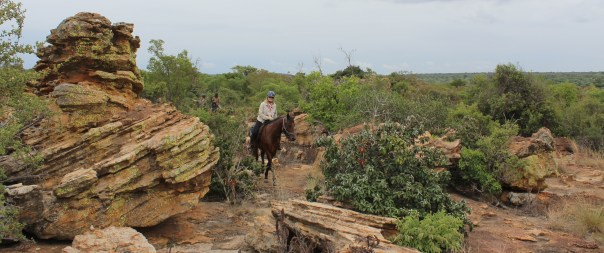
One of the highlights of the ride was reaching the crest of the Buffleshoek escarpment.

After coming across giraffe, we dismounted to descend through thick vegetation for a couple of miles.
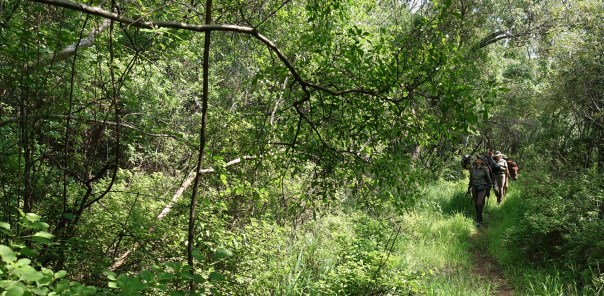
It was difficult to believe we had brought thirteen horses down the towering cliff face.

After perhaps the greatest of many long canters up the sandy tracks of the Waterberg

the riders made it to Jembisa game reserve where, after following oryx though seringa woodland,
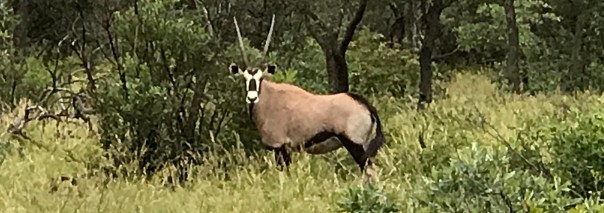
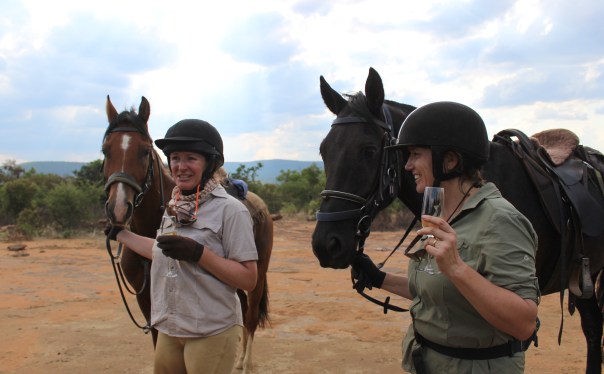
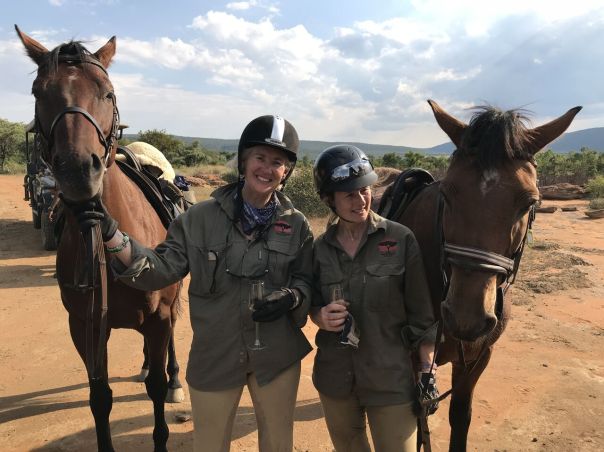
the team was greeted by chilled champagne set out under a tree.

Our goal had been reached, the ride had ended. Most riders had spent a total of 38 hours in the saddle over 7 days: quite an achievement.
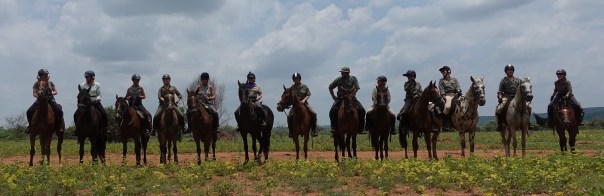
~Photographs by Ant Baber who led The Waterberg Trust Challenge Ride 2019~

The next day, riders were able to visit Lethabo Kids Club in the township of Leseding where we met children who had benefited from TWT’s grant to the ‘Back to School’ project and handed over a donation of sports clothes and underwear for Nurse Grace to distribute. She updated us on how successful Dignity Dreams sanitary packs were proving by enabling schoolgirls to remain in lessons whilst they have their periods.

TWT Trustees saw some of the 24 security camera erected to combat rhino poaching in the Waterberg and discussed plans to install more of these effective deterrents.

Very many thanks to Ant’s Nest and Jembisa who hosted the ride and enabled so many of us to visit community projects supported by The Waterberg Trust.

The Waterberg Trust Logo with white writing

The gift of a vegetable garden

The environmental consulting company Environmental Impact Management Services (EIMS), based in Gauteng, has made the astonishing gift of a vegetable garden to aid sister Grace in her work teaching life orientation skills at Meetsetshehla Secondary School at Vaalwater in the Waterberg.

Andrew Smith and his team of twenty environmental scientists wanted to contribute to the work of The Waterberg Trust by making a gift of their know-how before spending a weekend in the African bush.

We never guessed that they would arrive with 33 bags of compost.

The staff and pupils gratefully accepted trays of lettuce, spinach, beetroot and onion seedlings as well as a variety of much-needed seeds. ‘I was speechless,’ Nurse Grace said. It was an answer to prayer. They even brought seed markers.

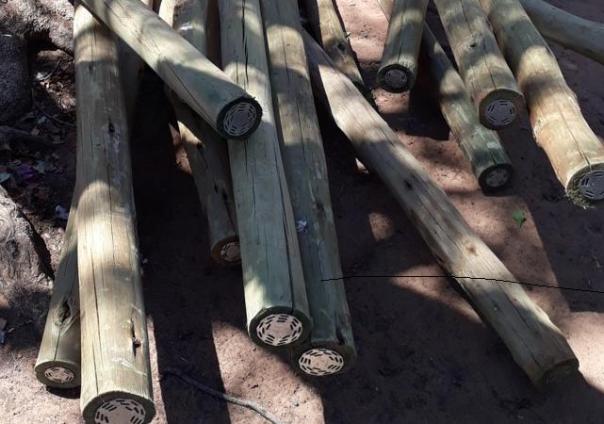
EIMS also donated garden netting, watering cans, tools and ordered treated poles from a local supplier so that pupils could erect shade-netting to protect the seedlings from birds and drying out in the sun.

The team from Environmental Impact Management Services also bought a year-planner and books that provide information and advice on when to plant and how to gain optimum productivity.  Nurse Grace said, ‘We learnt a lot about keeping vegetables healthy and effective planting methods.’

School exams were in progress but the team were able to meet some of the pupils and explain how best to sustain the vegetable garden established by Nurse Grace a year ago. While Meetsstshehla has been acknowledged as a leading Green School in the Limpopo Province, nurse Grace plans to share the vision with other schools that she visits in the Waterberg.

Nurse Grace had time to discuss other plans for the community. Environmental Impact services are generously donating 95 packs of washable sanitary pads so that all the Grade 8 school girls can participate fully in school activities. A team from Dignity Dreams  in Pretoria will come to instruct both boys and girls on menstrual health when exams finish.

~Explaining to guests about our green school project~

Andrew Smith said, ‘We have been involved in developing an air quality awareness campaign for one of our clients over the last 12 months. The programme is aimed at education focused specifically on how burning practices in the homes and communities can negatively impact the air we breath. Burning of waste and the use of coal fires in the home for cooking and warmth during winter are some of the issues the campaign focuses on. We have rolled the campaign out in some primary schools as well and we’ve developed puzzles, colouring books, quizzes and drama competitions. We have asked our client whether they will allow us to use the material elsewhere and we’re waiting for their comments. This educational content might be something Nurse Grace, or other teachers, could use during some of the Life Orientation classes.’

~Showing EIMS part of the garden and how we make compost manure from waste~

Andrew Smith's donation 4

If you would like to make a donation towards the creation of a school vegetable garden in the Waterberg or towards multi-use sanitary pads for pupils please click here detailing your wishes. Sets of sanitary packs cost R220  and last for approx 48 months. We are hoping to raise enough money for all the school girls in the Waterberg to be kitted out.

Highlights of The Waterberg Trust Challenge Ride 2018

Ant Baber led the fourth Waterberg Trust Challenge Ride, taking a new route across the Waterberg Plateau from Ant’s Nest to Jembisa on the Palala River to the north, covering 187kms on horseback over six days and crossing seven different game reserves.

Team members from the UK and Bermuda had been busy raising sponsorship, 50% of funds going to Save The Waterberg Rhino and 50% to community projects that uplift the people and place of the Waterberg in the Limpopo Province of South Africa

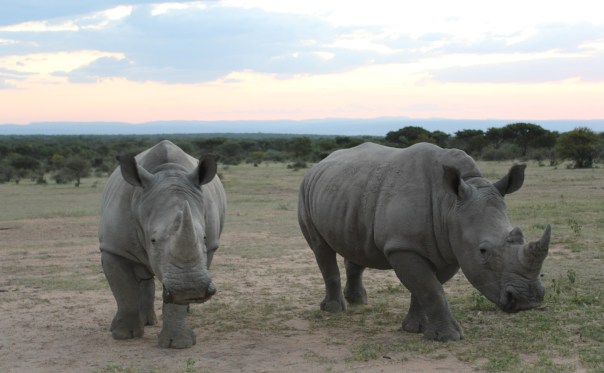
White rhino on Ant's Nest

While we had excellent game viewing, we also enjoyed very good food.

Meals were served in a variety of different settings, enabling the team to get to know each other and have time to chat to guides and directors of the game reserve. It was a true safari, in that we went on a journey through the African bush.

Coming across wild animals made our spirits soar.

We were able to get unusually close both on foot and on horseback.

What the animals thought can only be guessed.

But the riders wrote to say how amazing it was. ‘I think you have a winning formula as the riding is wonderful but all the extra experiences such as the school, youth club, church and visiting Clive Walker, enriched it and made it a truly unique experience and insight into the Waterberg.’

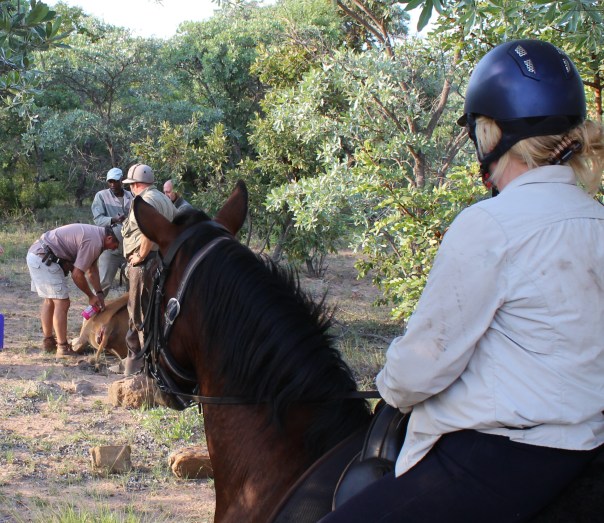
On the second day we had a real life adventure, helping the local vet.

‘It was a truly memorable adventure’

The horses were used to approaching wildlife as they graze with other animals in the bush.

It was high summer in South Africa so the afternoons could get hot and tiring

and the road was sometimes steep

but each day was full of variety

and we developed a huge sense of camaraderie.

‘…it was just pure fun and I felt so carefree’

We each had time to develop a relationship with our horse.

While the herd enjoyed the grazing we loved finding out about the projects supported by The Waterberg Trust.

It was a privilege to meet the local people.

These included exceptional women changing the lives of children.

‘Apart from the riding, we so enjoyed seeing all that The Waterberg Trust supports. There are some incredible people involved.’

We met the conservationist Clive Walker and learned of  what he had achieved for the UNESCO Biosphere and good to hear his new plans for the Waterberg Living Museum.

It was a privilege to be able to watch wild animals from horseback.

The landscape was ever-changing.

After five days in the saddle we reached the Palala River without mishap and thanks to the teams at Ant’s Nest and Jembisa, we were able celebrated the finish in style.

‘It really was a very special trip and a challenge at that.’

Special thanks go to Ant Baber and his family for looking after us and enabling us to ride across the land of their forefathers and beyond.

It was ‘a really amazing experience’.

The horses needed a good rest and the riders were tired but everyone agreed that it had been an incredible week of exploration.

Nurse Grace at work in the schools of Vaalwater: Part 2

Nursing Sister Grace Ismail has sent us more photographs of her work in the secondary schools of Vaalwater in the Limpopo Province of South Africa:
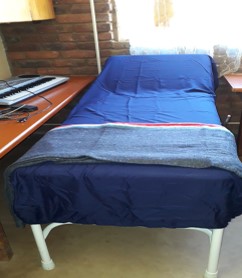
~Examination couch with linen covers~

‘We received a donation of examination couch which is helping a lot when learners are feeling unwell and can rest before the family takes them to the clinic.

~Grade 8 pupil with chronic illness under diet supervision~

‘We received disposable sanitary pads and bras, which were distributed to leaners of Meetsetshehla and Leseding Secondary Schools. This helped our girl learners a lot and gave them opportunity of attending classes without any worry of menstrual challenges.’

~Girls who received donated sanitary pads~

‘Health education was conducted to all grade 8 learners about hygiene and communicable diseases. These are learners from both Meetsetshehla and Leseding Secondary Schools.’ It was a form of welcome, educating them on the importance of hygiene and prevention of infections in schools. ‘The team from the local government clinic who are involved in youth and gender based programs (Love Life) were also present during the sessions as motivational speakers.’

~Learners participating during class health talk~

 FUTURE PLANS:

  • ‘To reinforce early childhood development from primary school level and ensure the children are well-informed with various issues that will help them to cope in Secondary School.’
  • ‘Meetings with stakeholders will continue as they also contribute to support our learners i.e. The Social Development, Local Government Clinic, Social workers, Police and the Community at large.’
  • ‘To continue supporting girl learners with menstrual issues whenever we receive any donation of sanitary pads in order to keep them in school when menstruating.’
  • ‘To ensure that all the learners with HIV are taking their treatment and adhering to the appointment as scheduled from the clinic.’

~Transformed learner witnessing to students~

  • ‘To have our own library at the school where learners can utilize for study and do their homework. The library in our township is very small that learners are unable to fit in to search for relevant study information on internet and books because of congestion.’

~Women who prepare meals for more than 500 learners daily~

  • ‘Learners have a project called UBUNTU whereby they collect unused clothes from teachers and then donate to the needy in the community, presenting clothes to needy children’

~Donation of clothes to the needy children in the community~

Two pupils represented the school in Provincial competition held in Polokwane City. One boy came 1st in the high jump.~Two who excelled in athletics~

Sister Grace says, ‘I still have more work to do with primary schools next term.’

If you would like to make a donation to support Sister Grace in her work, please click here

Nurse Grace’s work at schools in the Waterberg

The Waterberg Trust instigated the role of School Nurse to minister to the young people and children of Vaalwater in the Waterberg, South Africa in 2018.

Exam on new bed

-A pupil with Sister Grace, using an examination couch donated by Dr Albert Poitier-

Nursing Sister Grace Ismail is the first school nurse assigned to state schools in the Limpopo Province. She is based at Meetsetshehla Secondary School in Vaalwater where she is in the ideal position to help the emerging generation face the HIV/Aids pandemic and cope with problems such as drug and alcohol abuse in the township of Leseding.

Tree Planting (2)

-Tree-planting with students-

500 learners were reached in class this term and offered different healthy topics ranging from hygiene, infection control in schools and HIV/TB prevention.’

Life Orientation Teacher at Leseding HighSchool

-Sister Grace working with the Life Orientation Teacher at Leseding Secondary School- 

Sister Grace has also been working with Life Orientation teachers and Community Workers at the schools, getting pupils keen on growing vegetables and planting trees. This encourages everyone to look to the future and care for their environment.

Working in the garden

-Growing fresh vegetables-

Some learners have psychological trauma and can’t concentrate in class due to dysfunctional families and lack of support.‘ Others have nutritional needs. 

Life Orientation - Working in the garden

Nurse Grace initiated a re-cycling project to generate funds to provide learners with sanitary products so they do not miss school. She gives counselling and careers guidance as well as providing First Aid.

While Dr Peter Farrant of the Northern Education Trust oversees the nursing work, The Waterberg Trust provide this NGO with a grant to pay for Sister Graces salary.

-Sister Grace with the Community Workers programme-

If you could make a donation or monthly contribution to support the school nurse’s life-changing work, please click here for details on TWT’s Donate Page.

Examination on new bed-Sister Grace at work in schools in the Waterberg, Limpopo Province, South Africa-

Viewing Bushmen painting and visiting Lethabo Kid’s Club on day 7 of The Waterberg Trust Challenge Ride 2018

TWT Ride 2018 weaver nests

We woke to the sound of birdsong and were soon up and off, walking to a site of historic interest that cannot be reached on horseback.

TWT Ride Day 7 walking off to Bushmen paintings

Being on foot gave members of the team a chance to study the insect life:

TWT Ride 2018 Day 5 locusts in aloe

Some opted to reach the spot in the Landcruiser

which proved good for warthog-viewing.

The aim of the morning was to climb down the escarpment a little way

to find ancient bushmen paintings, preserved from weathering by overhanging rocks.

We learned about the original inhabitants of the Waterberg who called themselves the people of the eland, hunting with bows tipped with flint arrowheads.

After a quick brunch we drove into Vaalwater to visit Lethabo Kids Club in the township of Leseding.

TWT Ride 2018 Little boy at Lethabo Kids Club

A portion of the money raised by the riders went to  help this outreach that supports little children in the community.

Lethabo Kids Club run a ‘Back to School’ project whereby families battling to kit out their children for school can apply for one item of uniform.

Most of them chose school shoes. These are fitted properly at a local shop who are able to give a discount as up to 160 children were brought along this year.

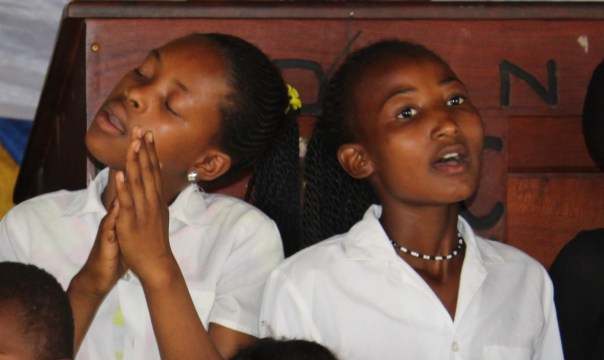
Riders were thanked and entertained with songs and dancing as more children arrived.

Some of the performances were excellent.

The riders also met Sister Grace who has begun working as a school nurse in Vaalwater.

The Waterberg Trust provide her salary and she has an office at Meetsetshesetla Secondary School. She gave a talk explaining all her job involves, including HIV/Aids prevention and awareness.

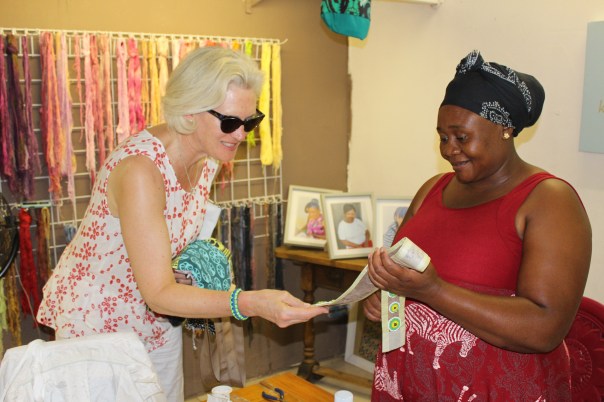
We then visited Kamatsogo, a community based sewing project, that has a workshop and craft shop in Vaalwater selling fine embroidery and beaded crafts.

It was great to learn about this  not-for-profit enterprise involving local women.

While some riders returned to Johannesburg airport to catch their flight home, others were able to stay on for a last game drive and evening of celebration under the stars.

The Waterberg Trust would like to extend a big thank you to all the riders and their supporters for raising funds and awareness to uplift the people and place of the Waterberg.

Day 6 of The Waterberg Trust Challenge Ride 2018

TWT Ride 2018 - DAY 6 walking down to the Palala River (2).jpgAfter walking the horses down a steep track on Jembisa game reserve, we finally made it to the Palala River. It’s normally too deep to cross on a horse but the drought of 2017 resulted in unusually low water.

The rocks looked slippery but Ant Baber decided we could walk across.

TWT Ride 2018 DAY 6 - Riders crossing the Palala River going north.jpg

As we made our way the Rooisloot valley we came across interesting plants such as this Transvaal gardenia.

Greater kudu enjoy eating the green seed pods and had effectively pruned the bushes.

The aim was to ride up to the wetlands at the very north of the reserve.

We had entered at the gate just south of Emily’s Camp. Today we reached Kwarriehoek near the road to Makopane, which you can see at the top right-hand corner of this map.

It was good to have reached the open grasslands after having spent six days in the saddle.


Mission accomplished. We could ride no further north.

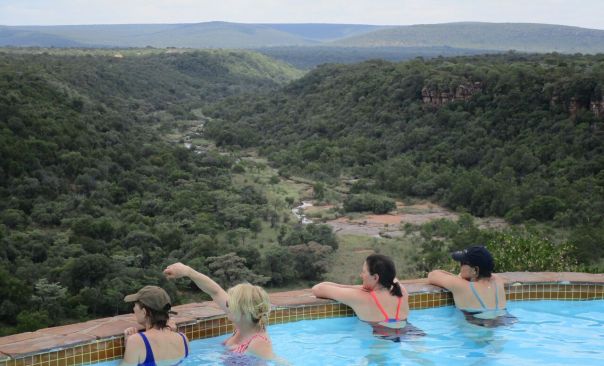
A highlight of the day was lunch at a house on the game reserve which has a pool with an incredible view, looking north down the Palala River Valley towards Lapalala Wilderness where we had been the evening before.

We mounted the horses and crossed back over the Palala, which flows north into the Limpopo on the South African border with Zimbabwe.

TWT Ride DAY 6 2018 crossing the Palala River - photo Sophie Neville

Without pausing to remove our helmets, we dismounted and climbed up the steep cart track in our hot clothes. The horses were fine but it was hard on the riders.

Once we reached the plateau, it wasn’t long before we were met by the back-up team.

They had brought us champagne to celebrate the end of the challenge ride.

Everyone was tired, but happy, if a little dazed.

No one had fallen off. There had been no injuries or mis-haps. The horses were still in good condition. We had explored a new route, which had proved varied and exciting. Ant Baber decided the ride had been a success.

We’d made it!

We had come so far and seen so much. The experience had challenged and extended each one of us..

We climbed back into the saddle and had a cheer from the team from Newbury, before making our way back to the lodge.

The riders enjoyed one last exciting gallop before bidding farewell to the horses, who had all done so well. We’d covered 187 kilometres in total – 197kms if you counted the ride before the official trek began six days before.

Very many thanks to all our sponsors and donors who encouraged us on our way. The funds raised will go a long way to help Save The Waterberg Rhino increase security in the area and will support community projects run by trusted charitable organisations that uplift the emerging generation by providing education or healthcare.

If you would like to make a donation to The Waterberg Trust please click here

~TWT Trustees: Belinda Chaffer and Sophie Williams-Thomas~

60 pupils from Leseding sent to Lapalala Wilderness by The Waterberg Trust

In February 2018, The Waterberg Trust enabled 60 local teenagers from Leseding Secondary School in Vaalwater to attend a week’s residential course on environmental awareness at Lapalala Wilderness School in the Limpopo Province of South Africa.

The students were given a grounding in nature conservation and experienced the beauty and importance of South African wildlife.

This python was very much alive as was the chameleon that the young people also handled.

27858732_1LWS wildlife 2

The idea was to take away fear of culturally reviled animals and teach students how to handle reptiles and creepy crawlies they might encounter. When they return to the township of Leseding, the teenagers are given a mentor who they can text if they find a snake in the house or hear of worrying wildlife issues.

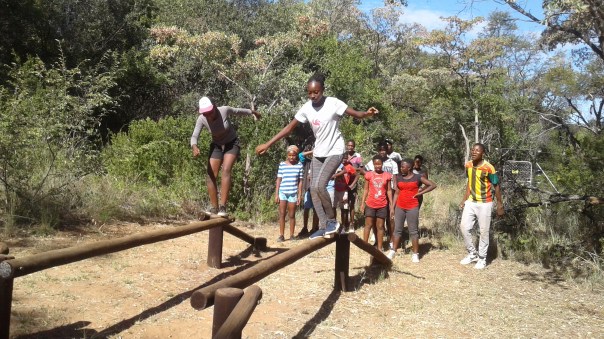
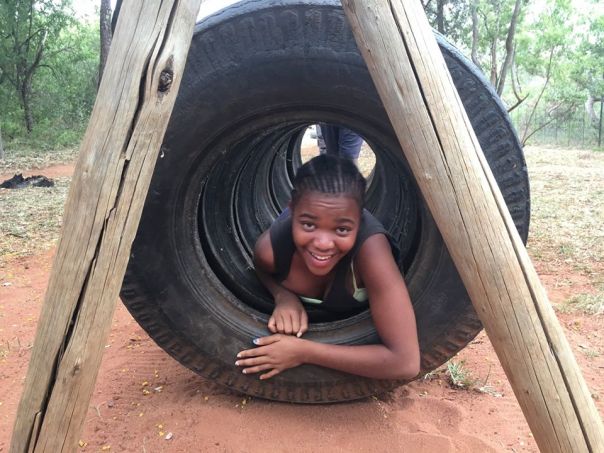
Everyone enjoyed the obstacle course in the African bush and learnt how to use maps in a wilderness situation.

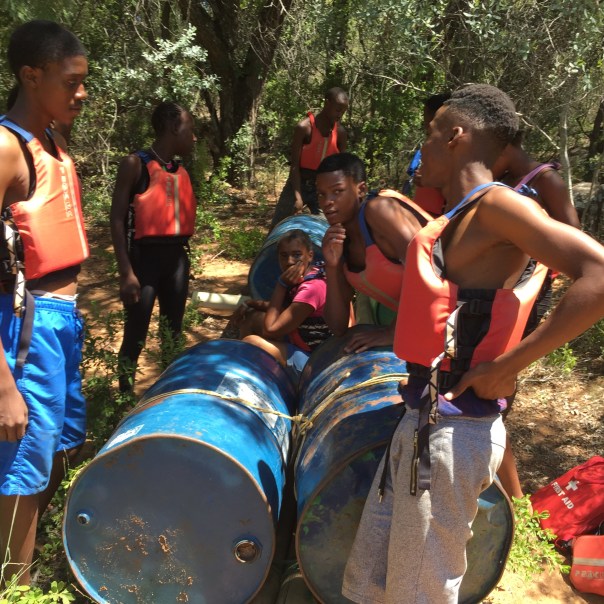
One day they donned PFD life-jackets to experience what it would be like to swim in the Palala River. It was a great way to cool off after a hot day in the African bush.

One exercise was to build a raft and get out on the water, which was an eye-opener for many. Mr Mashudu Makhokha, Director of Lapalala Wilderness School said, ‘Raft building is one of the activities that enhance teamwork, problem-solving and communication skills.’

The pupils also studied wildlife in the river system and learnt more about water. They  learnt to identify various kinds of aquatic animals – and the basics of how to use SASS (South African Scoring System) – which uses the presence/absence of a variety of freshwater macroinvertebrates to gauge the health of riverine ecosystem.’

Co-operation, team-building and leadership training were important parts of the course. ‘Students discovered that good teamwork is essential.’

However, recycling, eco-systems, the environment and the significance of South African wildlife was at the core of this inspirational week that ties in with the school curriculum and gives the teenagers a grounding for life.

You can see the students here on an interpretive hike that gave them an opportunity to learn basic ecology and gain a changed attitude towards biodiversity.

Could you help raise funds to enable more local children to go on this residential course? It only costs R380 per person a day (about £24) so is exceptionally good value. All food and dormitory accommodation is included. The Waterberg Trust like to provide the cost of transport from the township of Leseding, to ensure that no one is excluded for economic reasons.

Thanks go to those who took part in The Waterberg Trust Challenge Ride 2017, who raised enough money for these 60 pupils and two of their teachers to enjoy this life-changing opportunity. Hopefully some of these young people will consider a career in nature conservation, tourism or teaching in the Waterberg.

Trustees of The Waterberg Trust took TWT Riders to Lapalala Wilderness School in January, when they enjoyed meeting the staff and learning about new projects.

TWT Riders 2018 learing about community projects in the Waterberg

You can read more about Lapalala Wilderness School here and watch this video made for their 30th Anniversary. It’s fun:

ACKNOWLEDGEMENT:  Lapalala Wilderness School is immensely grateful for the assistance that The Waterberg  Trust has given. This support has enabled 60 children and two adults to attend an environmental education course in 2018. We hope that with ongoing support from TWT, we can continue to bring young people to LWS and awaken in them a love for the environment and a commitment to conserving it.

Day 5 of The Waterberg Trust Challenge Ride 2018

We rose early and saddled up the horses for a day full of promise.

Ant Baber, who had planned the route, was keen to cross Lindani game reserve and reach Jembisa to the north that morning. We had a long way to go.

The riders set off from Motseng Lodge where we’d spent a comfortable night.

We crossed the Melkrivier, a tributary of the Palala River, avoiding the footbridge.

TWT Ride 2018 crossing a stream on Lindani - photo Sophie Neville.jpg

It was a good chance to water the horses.

From here, we made our way up a steep, jungly kloof chocked with dense vegetation.

It is in these valleys that you find the most ancient trees that thrive in relatively sheltered conditions where they have access to water.

Being on an intercontinental convergence zone, the Waterberg is home to over 350 different species of tree from baobabs to wild fig – a greater variety than the whole of western Europe.

We suddenly found ourselves at the top of the hill where the vegetation opened out.

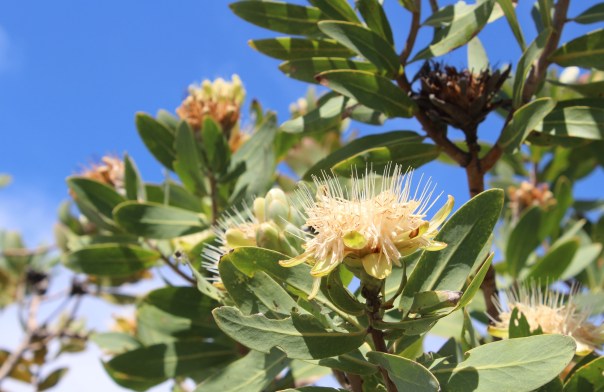
Wild proteas, the national flower of South Africa, were growing here.

TWT Ride 2017 wild proteas.jpg

We climbed higher still, taking a track that gave us occasional views across the Waterberg.

This unique unspoilt wilderness area  has been declared a UNESCO world biosphere.

On reaching the top of the Buffelshoek escarpment we dis-mounted

and lead the horses, on our quest to reach the very north of the game reserve.

TWT Ride 2018 dismounting to tackle a steep hill - photo Sophie Neville.jpg

We walked some way down the steep trail.

It was good to stretch but quite hard work as temperatures had risen.

TWT Ride 2018 walking down a steep section.jpg

After a while, we were able to look back at the impressive escarpment, looking for vulture roosts in the rocky outcrops.

A sandy path led to the north gate of the reserve and out onto the road.

We were able to canter up this track to reach the southern gate of Jembisa,

a 3000 hectare private game where the manager was waiting to let us in.

We were soon able to water the horses and rode through the bush, looking out for wildlife such as zebra, wildebeest, warthog, oryx and impala who had young at foot.

After about five kilometres, we took the chance for another exhilarating canter down an old air strip.

After untacking the horses, rubbing them down and making sure they had plenty of hay and water,

we made it to the lodge in time for a late lunch, which was served under the trees.

It was difficult to leave Jembisa,

especially since they have a wonderfully refreshing pool

but we climbed into two game drive vehicles and were taken to the neighbouring reserve.

We had come to find out about the Lapalala Wilderness School, established in 1985

Funds raised by The Waterberg Trust Challenge Ride are being used to enable sixty local teenagers and their teachers to attend a week-long residential course on nature conservation here. You can see photos of the last group sponsored on Facebook here.

For local children, this course costs 375 Rand each per night, fully catered, which is exceptionally good value for a life-changing experience. TWT also fun transport from the township of Leseding.

After meeting the director and learning how the school raises environmental awareness,

riders came face to face with one of the teaching aids – an impressive Burmese python.

Rescued from a life spent in restrictive captivity this beautiful snake is used to show local children how important it is to treasure the wildlife of South Africa and that all animals have a role in the eco-system. To find out more about Lapalala Wilderness please click here.

TWT Ride 2018 Viv Thomas handling a Burmese python.jpg

You can find out about Jembisa, who kindly sponsored the ride by letting riders cross across the reserve and stay for the next two nights in great comfort by clicking here

or watch their marketing video here:


Visiting Boschdraai Primary School on day 4 of The Waterberg Trust Challenge Ride 2018 –

TWT Ride 2018 DAY 3 - view from Bushwillow

The fourth day of The Waterberg Trust Challenge Ride 2018 was one of contrasts. We woke to clear weather although rain was forecast. This was welcomed as we had a long way to go and needed cool conditions.

TWT Ride 2018 DAY 4 - Riders leaving Windsong.jpg

We left Windsong Cottage, mounted our horses and rode to Boschdraai Primary School at the nearby Sesotho village.

TWT Ride 2018 DAY 4 - Boschdraai Primary School who received gifts of pens and pencils from riders.jpg

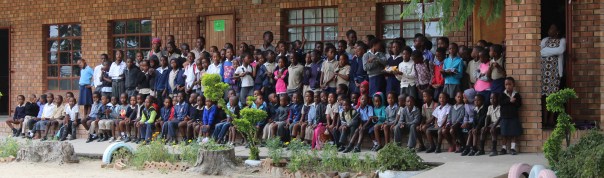
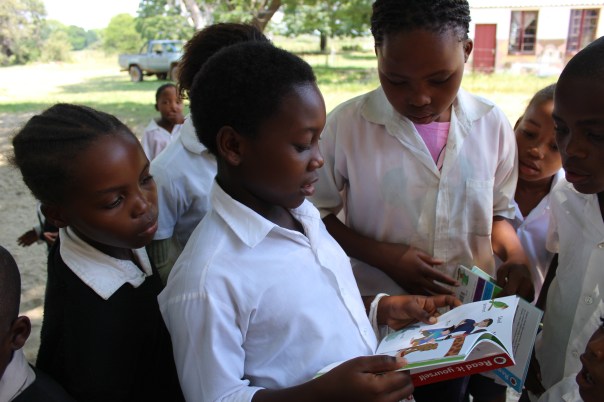
The riders had brought pens and pencils for the 140 children who expressed their thanks by singing three very touching songs. Pupils have really appreciated books donated by TWT riders over the years.

Books donated to Waterberg schools by TWT riders

The headmistress, who has been working at the eco-school for 24 years, needs a new printer with ink cartridges. She needs set pupils work as she only has one other teacher and three classes of children.

TWT Ride 2018 DAY 4 - Michael riding in the dust

We passed wild fig trees as we cantered down sandy farm tracks to Horizon Horseback’s game reserve and picked our way through the natural rock formations of Ghost Kopjie.

TWT Ride 2018 DAY 4 - Riders approaching Ghost Kopjie.jpg

Fissures in the old red-standstone, said to be formed in the pre-Cambrian era some 4 millions years ago, is home to nocturnal creatures such as owls and porcupine.

TWT Ride 2018 DAY 4 - Helena riding through Ghost Kopjie.jpg

At one stage it got too tricky for the horses but we had never taken this route before.

We had to double back a bit but we made it down to the grasslands below.

We saw jackal as we crossed the plans plains, took a break by a lake, and rode on down long marrum roads that run between game reserves. The vegetation became lusher.
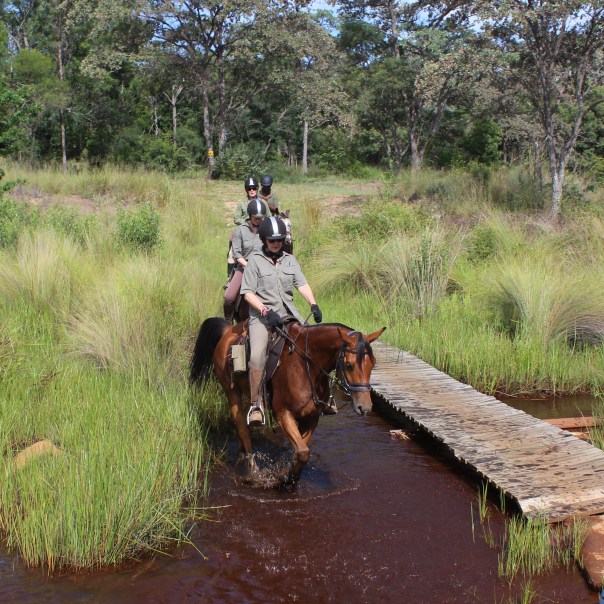
TWT Ride 2018 DAY 4 - cantering down the road in the rain.jpg

Rain set in and the going became slippery but the horses kept cantering.

TWT Ride 2018 DAY 4 - Mary and Pip riding in the rain.jpg

It was not long before we reached Lindani game reserve where the back-up crew had set up lunch in a paddock where we could unsaddle the horses and let them relax.

Ant warned us that there had been a crocodile attack on the nearby dam.

But it hadn’t been seen for a while and the horses were able to roam freely.

The riders enjoyed a barbecue lunch by the wetland.

Some were in need of reinforcements.

That afternoon we saw zebra, wildebeest and warthog as we cantered across the plains.

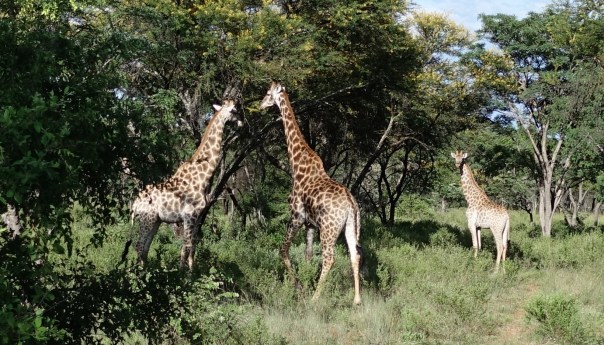
As we rode into a belt of acacia woodland we came across giraffe with young.

They allowed us close enough to take photographs.

Giraffe have a different gait to other animals, although horses can be trained to walk as they do, which is meant to be more comfortable for the rider.
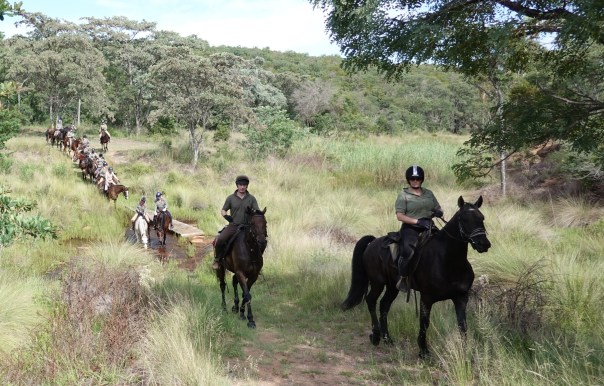
It was a long but varied day.  Sandy tracks across the reserve to Motseng Lodge.
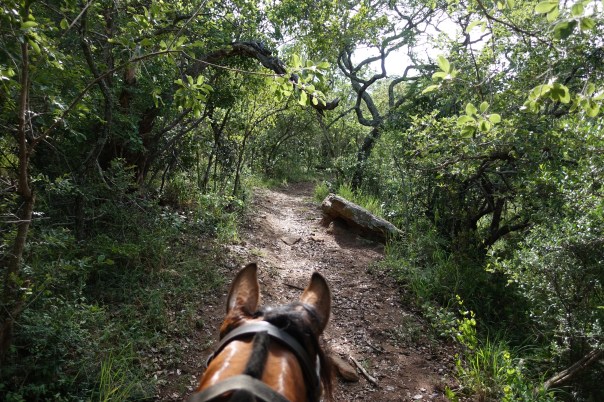
We were thirsty by the time we reached the paddock where the horses were to spend the night but Ant and the riders were still smiling.

To see footage taken from the helmet of one of the riders on this day – please click here

You can see a little of what Lindani is like and take a look at Motseng, the lodge where we spent the night here: